
Use-Inspired Research Co-Created With Non-Academic Partners
Cornell Atkinson leverages our Innovation for Impact Fund (IIF) to build partnerships and consortia that co-create research agendas, execute unconventional projects between researchers and practitioners, and bridge the gap between scientific knowledge and action on the most important sustainability issues.
We support basic and applied research with a clear pathway to impact and an emphasis on actionable, near-term results. Our Strategic Partnerships team leverages the IIF to:
- Run competitive funding programs for collaborative proposals co-designed with our partners
- Facilitate strategic projects and initiatives co-designed with partners and executed by blended work teams of Cornell faculty, professional staff, and external collaborators
- Enable participation in multi-stakeholder consortia, such as CPIC, TSC, and Field to Market
IIF-supported interdisciplinary teams comprising academics and practitioners collaborate to develop actionable insights, demonstrate new concepts, design useful tools, pilot applications of scientific discoveries, and implement practices that can shape real-world policies and outcomes.
Apply for IIF Funding Opportunities
Eligibility:
- All Cornell PIs and CoPIs must meet Cornell’s principal investigator (PI) eligibility criteria
Open Calls for Proposals:
- EDF & Cornell Atkinson Joint Research
- TNC & Cornell Atkinson Joint Research
- EDF & Cornell Atkinson Rolling Fast Grants
- Request for Proposals: Proposals reviewed on a rolling basis
Past Calls for Proposals:
- The 2030 Project “AI & Climate” Research-to-Impact Fast Grants
- The 2025 cycle is closed: Previous Request for Proposals
- Jacobs Center & Cornell Atkinson Joint Seed Grants
- The 2026 cycle is closed: Previous Request for Proposals
IIF Projects:
Modeling the Joint Distribution of Wind and Rain Risk from Tropical Cyclones
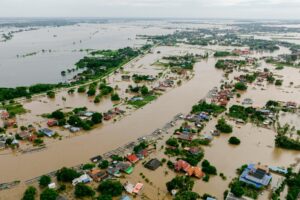
This project will improve how hurricane/cyclone risks are estimated in a changing climate by modeling the combined danger of extreme wind and heavy rain. Tropical cyclones often cause both hazards at the same time, but detailed storm models are too costly to run for the many events needed in risk planning. The researchers will use faster physics-based models, historical storm tracks, climate data, and large sets of simulated storms to estimate how wind and rain risks may change in past and future climates. A postdoctoral researcher will help expand the code, test methods, and turn results into useful tools. The project will support better insurance, planning, and resilience decisions for communities facing stronger climate hazards.
Cornell: Jonathan Lin (Cornell CALS/Earth and Atmospheric Sciences)
External Partner(s): TBD
Data Science to Build Resilience and Improve Humanitarian Response
This project will gather leading researchers and policy experts to explore how data science advances can strengthen responses to climate emergencies and food security crises. The summit will examine three key areas: creating better data systems in regions with limited information, improving prediction models using machine learning, and designing early warning systems that help organizations make faster decisions during humanitarian emergencies. Representatives from international organizations, development banks, and research institutions will participate in discussions that bridge the gap between technical innovation and real-world disaster response. The project will produce a comprehensive white paper identifying research priorities and opportunities for future collaboration. By connecting data science capabilities with humanitarian needs, this initiative aims to improve decision-making and resource allocation during climate-related disasters, ultimately helping vulnerable communities prepare for and respond to environmental threats more effectively.
Cornell: Christopher Barrett (Cornell SC Johnson College of Business/Dyson School of Applied Economics and Management)
UN World Food Programme (WFP): Kyriacos Kouppari (Head of Hunger Monitoring Unit)
UN Refugee Agency (UNHCR): Rebeca Moreno Jimenez (Lead Data Scientist)
From Subsurface Potential to System-Level Reality: Assessing the Strategic Role of Geologic Hydrogen in a Net-Zero Energy System
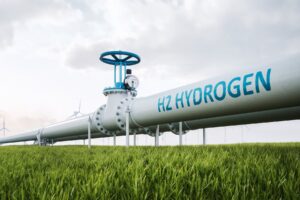
This project will assess whether geologic hydrogen, a naturally formed gas found underground, can become a practical low-carbon fuel for industry and transportation. The researchers will combine maps of possible hydrogen deposits with data on pipelines, drilling capacity, skilled workers, industrial users, policy rules, and seismic risk. They will also build computer models to test how hydrogen could be produced from deep rock under different operating conditions. The project will review key factors that affect cost, safety, gas cleanup, emissions, and environmental value. Its results will identify the regions most ready for responsible early testing and will give policymakers, companies, and researchers clear guidance on where geologic hydrogen may help cut emissions in hard-to-electrify sectors.
Cornell: Chloé Arson (Cornell Duffield Engineering/Earth and Atmospheric Sciences)
Clean Air Task Force (CATF): Amy Ouyang (U.S. Associate, Hydrogen)
A Roadmap for Overcoming Barriers and Accelerating Conservation Agriculture at Scale
This interdisciplinary research project will investigate how artificial intelligence can transform conservation agriculture technical assistance for farmers. The research team will collaborate with the Keystone Policy Center to develop innovative solutions that address the current shortage of experienced conservation advisors and fragmented support systems. Researchers will explore how AI tools can complement existing technical assistance programs and make conservation practices more accessible to farmers nationwide. The project will expand beyond creating a white paper to map emerging technologies and identify promising pilot programs. The team will analyze how AI can streamline bureaucratic processes, improve data infrastructure, and create more efficient delivery models for conservation support. The research will focus on developing concrete solutions that funders and organizations can implement to better serve farmers’ conservation goals and improve agricultural sustainability outcomes.
Cornell: Louis Longchamps (Cornell CALS / School of Integrative Plant Science
/ Soil and Crop Sciences)
Partner: Keystone Policy Center
Leveraging AI and Forecast Models for Anticipatory Action Response Analysis To Reduce Acute Child Malnutrition
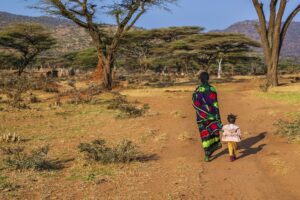
Through this collaboration between Cornell Atkinson and the Cornell Joan Klein Jacobs Center for Precision Nutrition and Health, this project addresses acute child malnutrition as a climate-sensitive threat by bridging the gap between advanced forecasting and effective humanitarian response. Building on machine-learning models that predict malnutrition risk months in advance, the project will design the scientific and technical foundations of an AI-enabled response analysis system. The system will integrate climate-informed forecasts with curated evidence on nutrition, cost-effectiveness, and operational feasibility to guide anticipatory action. Seed funding will support a Nairobi-based stakeholder workshop to define priority use cases, evidence requirements, system architecture, and safeguards, enabling future climate-resilient, timely, and cost-effective responses in high-risk settings across Kenya’s arid regions globally.
Cornell: Chris Barrett (Dyson School), Aditya Vashistha (Cornell Bowers), Julia Finkelstein (Human Ecology/Nutritional Sciences), Elizabeth Tennant (Dyson School)
International Food Policy Research Institute (IFPRI): Rebecca Brander (Nairobi)
Precision Nutrition Under Climate Change: An AI-Driven Framework for Household Vulnerability and Climate Resilience
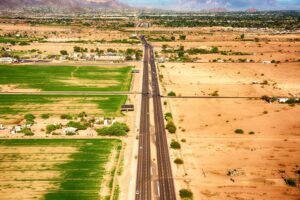
Through this collaboration between Cornell Atkinson and the Cornell Joan Klein Jacobs Center for Precision Nutrition and Health, researchers will develop an AI-driven precision nutrition framework to understand how climate shocks disrupt food security and health at the household level. By integrating longitudinal data from the Panel Study of Income Dynamics Child Development Supplement with linked family socioeconomic, cultural, activity, health, and rare genetic information, the study captures intergenerational and heterogeneous vulnerability. These data are combined with NOAA climate disaster exposure and analyzed using causal machine learning to estimate differential impacts across households. Counterfactual simulations of climate risks and policy responses will inform targeted, climate-resilient nutrition policies and strengthen future external funding applications.
Cornell: Harry M. Kaiser (Dyson School)
U. Kentucky: Yuqing Zheng (Agricultural Economics)
Isotopic Constraints on In Situ Carbonate Precipitation and the Control on Potential Enhanced Weathering Fluxes in an Upper Mississippi Watershed
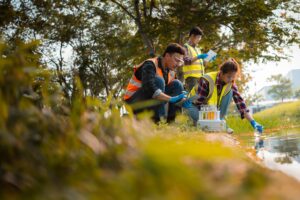
Enhanced rock weathering (EW) is proposed as a scalable carbon dioxide removal strategy, yet uncertainty remains regarding the fate of weathering-derived alkalinity within river networks. In agricultural watersheds developed in sedimentary basins, secondary carbonate precipitation can remove alkalinity and return CO₂ to the atmosphere, reducing net CO₂ removal efficiency. This project will apply calcium and strontium stable isotopes to empirically quantify carbonate precipitation and alkalinity loss in the Sangamon River–Lake Decatur system. Integrating isotope data with solute chemistry, alkalinity measurements, and high-frequency monitoring, this proof-of-concept study will provide data-driven constraints on carbonate “leakage” and inform robust measurement, monitoring, reporting, and verification of EW CO₂ removal.
Cornell: Louis Derry (Cornell Duffield Engineering / Earth and Atmospheric Sciences)
EDF: Emily Oldfield (Agricultural Soil Carbon Scientist)
Identifying Pathways to Reduce Absolute Methane Emissions and Emission Intensity From Smallholder Dairies in Maharashtra
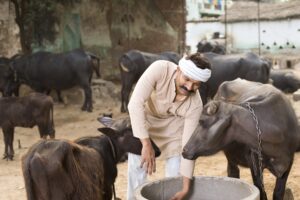
Significant investments have been made to reduce methane emissions from India’s dairy sector by incentivizing adoption of productivity-enhancing practices. However, efficiency gains often generate environmental rebound effects, whereby absolute emissions increase due to expanded production and consumption. This proposal augments methane and animal performance measurements from ongoing methane mitigation efforts in Maharashtra, India, with socioeconomic data to model decision-mediated relationships between efficiency, production, and consumption in the dairy sector. We test whether enhanced productivity reduces emissions and identify conditions under which profitability becomes a driver of environmental rebound effects. This project identifies when and how efficiency-based mitigation can reduce emissions without triggering environmental rebound effects driven by household decision-making.
Cornell: Jasmine Dillon (Cornell CALS / Animal Science)
EDF: Abhinav Gaurav (Lead Advisor, Sustainable Dairy)
An Intelligent Natural Language Processing Pipeline for Public Procurement Data: Enabling Predictive Policy Analysis

This project addresses a critical bottleneck in evidence-based food policy: the severe fragmentation and inconsistency of public procurement data. We propose to develop and validate an open-source, intelligent data-cleaning pipeline that uses AI to automate the transformation of raw, unstructured bid data into a unified, analysis-ready resource. To demonstrate its utility, we will conduct a proof-of-concept case study, applying an econometric model to the cleansed data to derive initial insights into bidding dynamics. This foundational infrastructure will directly unlock timely, rigorous analysis of values-based procurement policies, empowering municipalities to design strategies that effectively support local economies, disadvantaged vendors, and environmental goals.
Cornell: Houtian (Frank) Ge (Cornell SC Johnson College of Business / Dyson School)
EDF: Daniel Kaiser (Director of Agriculture Innovation, Climate-Smart Agriculture)
Clean Energy, Stable Climate, Thriving Communities: A Systematic Review and Case-Based Models for Achieving Equitable, Durable Environmental Progress

EDF and Cornell’s Center for Conservation Social Sciences will conduct a project that synthesizes research on inclusive and equitable technology, policy, and market-based approaches to climate and energy transitions. The team will translate key findings into practical criteria and actions for organizations like EDF to advance effective, inclusive and durable climate interventions in U.S. and global contexts. We will publish the results, create case studies, share the findings, and integrate the criteria into EDF’s planning, training, and accountability processes, including the new Planning, Monitoring, Evaluation, and Learning framework; annual Environmental and Climate Justice Intensive training; and the Environmental Justice Principles that guide EDF’s work.
Cornell: Reem Hajjar (Cornell CALS / Ashley School of Global Development and the Environment / Natural Resources and the Environment Section)
EDF: Allison Cobb (Associate Vice President, Equity and Justice)
Methane Emitting Infrastructure and Activity Mapping
This project aims to map methane-emitting infrastructure and activity across China using two key approaches: high-resolution satellite imagery and machine learning to identify methane-emitting infrastructure on the ground; and publicly available data sources (e.g., peer-reviewed studies, government yearbooks) and web scraping to extract methane-related activity data. Our goal is to create a comprehensive geospatial dataset of methane emissions sources, including the oil and gas supply chain, coal mines, wastewater treatment facilities, landfills, dairy farms, rice paddies, and wetlands. This work is critical for measurement-based methane source attribution, emissions tracking, and ultimately for supporting the development of effective methane mitigation policies.
Cornell: Bharath Hariharan (Cornell Bowers Computing and Information Science / Computer Science)
EDF: Donglai Xie (Senior Scientist II, China & Canada Methane); Yuyan Cui (Methane Scientist)
Electricity Rate Design and Heat Electrification

Electrification of space heating is central to achieving deep decarbonization targets, but its success depends on how electricity is priced at the retail level. While subsidies reduce upfront barriers to heat pump adoption, electricity rates determine operating costs, distributional impacts, and incentives for load flexibility. This project develops and applies a comprehensive modeling framework to evaluate how alternative residential electricity rate designs affect heat pump economics, adoption patterns, and system-level outcomes under evolving load shapes. The results will support evidence-based policy advocacy for innovative rate designs that make electrification affordable, equitable, and beneficial to the electric grid, with methods applicable across jurisdictions.
Cornell: Jacob Mays (Cornell Duffield Engineering / Civil and Environmental Engineering)
EDF: Erin Murphy (Director & Sr. Attorney, Clean Air & Energy Markets); Magdalen Sullivan (Attorney, Energy Markets & Utility Regulation)
Open-path Fourier Transform Infrared Spectroscopy for Continuous Monitoring of Ammonia and Greenhouse Gases From Manure Systems (EDF)
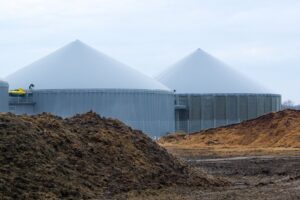
Manure management processes at dairy farms produce about 15% of all ammonia emissions in the U.S. – a major source of greenhouse gases. Open-path Fourier Transform Infrared Spectroscopy (OP‑FTIR) systems are currently the only tools that can continuously measure multiple gases from entire manure systems. USDA Agricultural Research Service will provide Cornell with two OP‑FTIR systems for more than three years. This will allow researchers to collect much‑needed baseline data on ammonia and greenhouse gas emissions at the Cornell Dairy Research and Education Center. These data are essential for improving models, testing emission‑reduction technologies, and supporting policies and incentives that help farms reduce emissions.
Cornell: Jason Oliver (Cornell CALS / Animal Science)
EDF: Joe Rudek (Lead Senior Scientist)
Bridging Economics and Climate to Build a Durable Case for Mitigating Hydrogen Emissions
The project will provide the first-ever quantification of the social cost of hydrogen to inform hydrogen-industry best practices, regulations, and energy policy. We will estimate the cost by integrating the H2 cycle and impacts on other greenhouse gases into the FaIR simple climate model. After calibrating this updated model, we will estimate the cost and develop an understanding of the environmental impacts of emitting H2 by itself and along with other GHGs. We will use this estimate to provide a monetary estimate of the environmental harms from existing H2 supply chain emissions (tracked by EDF), facilitating cost-benefit analyses of H2 abatement options.
Cornell: Vivek Srikrishnan (Cornell CALS / Biological and Environmental Engineering)
EDF: Nichole Saunders (Senior Director and Senior Attorney, Energy Transition), Tianyi Sun (Senior Climate Scientist)
Towards Battery Circularity: Blockchain-Enabled Semantic Traceability and Incentive Design for EV Battery Recycling

Millions of electric vehicle batteries will soon reach end of life as early-generation fleets retire, posing resource recovery challenges and toxicological risks. Current recycling systems suffer from fragmented data, opaque provenance, and misaligned incentives. We propose a Blockchain-enabled Lithium-ion Battery Circularity System (LiBchain) integrating a layered access control and a Resource–Event–Agent (REA)-based traceability schema to standardize life cycle data, including chemical safety attributes. A tokenized pricing mechanism will convert verified state-of-health, recoverable mineral content, and toxicity profiles into economic signals to incentivize compliant recycling. The project will ensure that research outcomes inform adoption pathways, support regulatory frameworks, and boost educational resources for a circular battery economy.
Cornell: Charlle Sy (Cornell Duffield Engineering / Systems Engineering), H. Oliver Gao (Cornell Duffield Engineering / Civil and Environmental Engineering)
EDF: Maria Doa (Senior Director, Chemicals Policy); Abhinand Krishnashankar (Manager, Economics and Policy)
The Half Ocean Conservation Initiative: Conserving the Hidden Depths of the World’s Ocean via a 3-D Biodiversity Assessment for the Mesopelagic Realm
The ocean’s mesopelagic zone provides critical global climate and ecosystem functions but is neglected in most conservation frameworks. New international ocean policy developments provide a timely window to protect mesopelagic organisms, but we need novel tools to translate the 3-D structure and linkages of mesopelagic communities to operational spatial management advice. We will leverage a global high-resolution marine species distribution model to identify priority areas for mesopelagic protection. Based on these outcomes, we will incorporate mesopelagic priority areas into ongoing high seas protected area proposals, and develop guidance for incorporating 3-D mesopelagic ecosystems and functions into international and national biodiversity conservation commitments.and stabilizing the climate.
Cornell: Gary Tabor (Cornell CALS / Ashley School of Global Development and the Environment / Natural Resources and the Environment Section)
EDF: Julia Mason (Social-ecological Systems Scientist)
AI-Enhanced Differentiable Computational Fluid Dynamics (CFD) for Urban Airflow Modeling and Pollution Source Inference
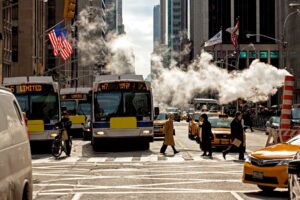
Urban air pollution can vary dramatically from one block to the next, but today’s tools either operate at kilometer scales or are so computationally expensive they cannot be used routinely for source identification. We propose an AI-enhanced, differentiable “neural-CFD” framework that fuses urban airflow physics with dense sensor observations to infer local pollution sources with quantified uncertainty. Cornell will build a new, fast modeling approach that combines GPU-accelerated simulation with physics-informed generative AI. EDF will guide use cases, provide dense sensor datasets, and ensure alignment with Air Tracker and Healthy Communities priorities. This project will give communities and local governments a practical way to identify the most likely sources of neighborhood-scale pollution.
Cornell: Jian-Xun Wang (Cornell Duffield Engineering / Mechanical and Aerospace Engineering)
Environmental Defense Fund: Tammy Thompson (Senior Air Quality Scientist)
Designing a Curtailment Credit Market: Leveraging Data Center Development to Incentivize Grid-Wide Decarbonization and Affordability

The project aims to develop and test a novel mechanism, named Curtailment Credit Market (CCM), that leverages AI data centers’ willingness to pay for uninterrupted power to unlock grid-wide demand flexibility. This willingness to pay is driven by the exceptionally high value of computation. Under CCM, when grid operators issue curtailment instructions, data centers can purchase tradeable credits from flexible loads that reduce consumption on their behalf. This transfers capital from high-profit tech operators to ratepayers while activating underutilized flexibility. Using network-constrained simulations and industry collaboration, we will test how this market mechanism can achieve simultaneous decarbonization and affordability goals while addressing growing AI data center power demand.
Cornell: Max Zhang (Cornell Duffield Engineering / Mechanical and Aerospace Engineering)
EDF: Thomas Brindle (Director, Legislative & Regulatory Analysis, U.S. Region)
Managing Ground-Nesting Bee Aggregations for Agriculture in North America
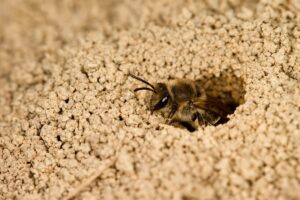
This project unites community science, ecological research, and applied management to study, protect, and enhance ground-nesting bee aggregations within agricultural landscapes. Researchers from Cornell and The Nature Conservancy will document robust nesting aggregations of ground nesting bees, identify the soil and landscape factors driving nesting success, and develop evidence-based best management practices to sustain, restore, and enhance these vital habitats on and around working farms. By integrating field data with geospatial modeling, they will build the first U.S. framework for incorporating ground-nesting bee conservation into agricultural planning. Ultimately, this project will connect pollinator habitat with on-farm decision-making, offering farmers practical, evidence-driven strategies to support native bees while strengthening the resilience and sustainability of agricultural systems.
Cornell: Bryan Danforth (Cornell CALS, Entomology)
TNC: Lesley Atwood (Agriculture and Climate Scientist)
Evaluating the Effects of Pesticide Reductions and Restrictions on Biodiversity

As populations of birds and butterflies continue to plummet across North America, a growing body of evidence points to pesticides as one important driver. Though multiple incentives to restrict or reduce the use of pesticides have been implemented from local to state levels, outcomes for biodiversity remain poorly tracked. Researchers from Cornell and The Nature Conservancy will (1) evaluate the effectiveness of pesticide restrictions and mitigation strategies, (2) identify which approaches and scales of implementation can best deliver positive outcomes for biodiversity, and (3) work with partners to develop outreach materials for municipalities, state agencies, input companies, and decision-makers.
Cornell: Laura Melissa Guzman (Cornell CALS/Entomology), Catherine Kling (Dyson School of Applied Economics and Management), and Amanda Rodewald (Cornell CALS/Ashley School of Global Development and the Environment; Cornell Lab of Ornithology)
TNC: Kris Johnson (Director of Agriculture, North America)
Modeling and Validating Restoration Site Priorities Based on Population Connectivity
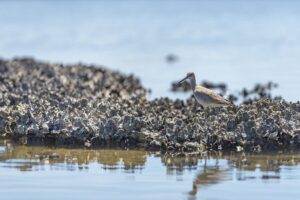
Coastal marine environments have suffered from historical overfishing, eutrophication and other pollution. Researchers from Cornell and The Nature Conservancy seek to restore and protect these ecosystems and their services by developing spatially explicit approaches to predict ecosystem-scale processes. Restoration often focuses on a few species with an outsized foundational role in building habitat that supports whole communities. In the case of oysters and other bivalves, their filter-feeding also provides water clarification and nutrient cycling ecosystem services, helping to reduce coastal eutrophication. Few other foundational species pack as much ecosystem punch as native eastern oysters, as well as important One Health links: the growing US oyster aquaculture industry, a coastal economic engine, contributes ecosystem services described above, generates an eco-friendly dietary protein, and is highly regulated for food safety.
Cornell: Matthew Hare (Cornell CALS/Ashley School of Global Development and the Environment)
TNC: Boze Hancock (Senior Marine Habitat Restoration Scientist), Carl Lobue (NY Ocean Programs Director), Marta Ribera (Spatial Ecologist)
Smart Flow Sensors For Smart Stormwater Management
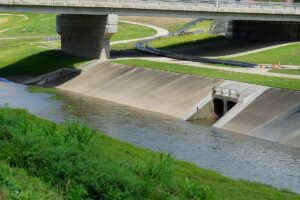
Climate change and growing urbanization are intensifying pressures on water resources. Urban watershed runoff leads to pollution and increased flood risk. The Nature Conservancy’s Brightstorm project addresses these challenges by implementing Digital Water Solutions (DWS), automating stormwater infrastructure operation. However, existing flow monitoring technologies that they rely on require physical water contact, are expensive and labor-intensive, and need specialized expertise and frequent calibration visits. Cornell and TNC researchers will develop a non-contact, image-based system to gauge surface water flow in small waterways, including natural and engineered channels. They will utilize infrared and visible-light images of the flowing water surface to calculate flow velocity and discharge, building on previous Cornell work using small, low-cost cameras. Unlike existing technologies, this system minimizes disruption at measurement locations, greatly expanding deployment possibilities, particularly on privately owned land. This will enable the expansion of DWS sites and flow gauging at other locations.
Cornell: Seth A Schweitzer (Cornell Duffield Engineering/Civil and Environmental Engineering) and Todd Cowen (Cornell Duffield Engineering/Civil and Environmental Engineering)
TNC: Matthew Rea (Director of Water Technology) and Craig Holland (Senior Director of Investments)
No Bull: Understanding Real and Perceived Barriers to Scaling Cattlevoltaics
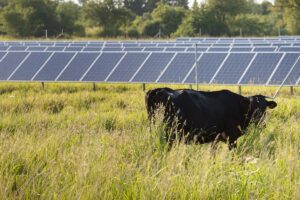
‘Cattlevoltaics’ combines solar energy production with cattle grazing beneath photovoltaic arrays. Social research specific to cattlevoltaics and grazing agrivoltaic systems is sparse. However, to scale up cattlevoltaics projects, real and perceived barriers to deploying cattlevoltaics within the agricultural community and solar industry must be identified. This mixed-methods social science project from Cornell and The Nature Conservancy researchers will feature in-person workshops with agricultural producers and solar developers hosted in different U.S. regions. Qualitative and quantitative data collection and analysis will capture key beliefs and attitudes, perceived opportunities and barriers, and interest level in cattlevoltaics. The research will build a deeper understanding of how different stakeholders approach cattlevoltaics, help foster ideas to solve cattlevoltaic project challenges, and pave the way to more quickly achieve conservation and socioeconomic benefits from projects at scale.
Cornell: Richard Stedman and Kathryn Walsh (both Cornell CALS/Ashley School of Global Development and the Environment)
TNC: Morgan Higman (Climate Strategy Director) and Jakob Lindaas (Director of Climate Action, TNC Colorado)
Strategic Advisory Support and Decision Framework Development of Natural Climate Solutions
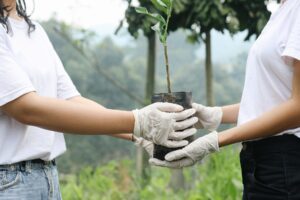
This project will help decision-makers choose Natural Climate Solutions (NCS) that can cut greenhouse gases from farms, forests, and other working lands. It will focus on practices in cool, moist regions, such as adding trees to working lands and improving manure management, while considering carbon dioxide, methane, and nitrous oxide together. The researchers will use a decision matrix to compare each option by benefits, ease of measurement, cost, practicality, and time needed for lasting results. They will also advise public, private, and nonprofit partners on goals, monitoring, policy, and investment choices. The project will produce clear guidance, presentations, and public materials to support smarter climate action and more reliable long-term results.
Cornell: Jenifer Wightman, Peter Woodbury (both Cornell CALS/School of Integrative Plant Science/Soil and Crop Sciences Section)
External Partners: TBD
Tracking RMI’s CDR Applied Innovation Roadmap Implementation

In the first phase of this project, Cornell University researchers will create an interactive digital dashboard to track progress in direct air capture technology development. The team will work with the Rocky Mountain Institute and the Direct Air Capture Coalition to monitor key milestones and achievements in Carbon Dioxide Removal (CDR) from the atmosphere. Scientists will update the dashboard regularly with new data about technological advances, funding, and policy changes affecting direct air capture systems. In the project’s second phase, the team will expand the dashboard with analyses of all other types of CDR covered in the roadmap and complete a status review of global academic research on unlocking the major research barriers within each approach. By bringing together information from industry, environmental groups, and universities, researchers will help investors and policymakers make better decisions about supporting climate solutions. This project will serve as a model for tracking other CDR technologies in the future.
Cornell: Phillip Milner (Arts and Sciences/Chemistry and Chemical Biology), Tobias Hanrath (Cornell Duffield Engineering/Chemical and Biomolecular Engineering)
External Partners: Rocky Mountain Institute, Direct Air Capture Coalition
Beyond Soil: Towards a Full GHG Accounting for Regenerative Agriculture
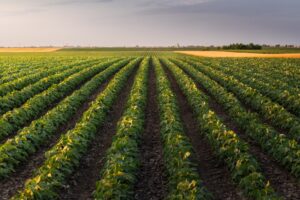
Researchers will study how regenerative farming practices affect greenhouse gas emissions and crop production across the United States. The team will use computer models to predict how different farming methods impact soil carbon storage, gas emissions, and food yields over the next 100 years. Scientists will examine various techniques, including no-till farming, cover crops, and crop rotations for major crops like corn, soybeans, and wheat. By mapping results across different regions, researchers will identify which sustainable farming practices work best in specific locations. This study will help farmers choose methods that both reduce climate change impacts and maintain strong crop production for food security.
Cornell: Dominic Woolf (Cornell CALS/School of Integrative Plant Science/Soil and Crop Sciences)
Environmental Defense Fund (EDF): Alison Eagle (Senior Scientist, Climate-Smart Agriculture), Doria Gordon (Lead Senior Scientist II), Emily Oldfield (Agricultural Soil Carbon Scientist), Jocelyn Lavallee (Agricultural Soil Carbon Scientist)
Transition Finance for Regenerative Agriculture Systems
Cornell researchers and staff launched the Transition Financing for Regenerative Agriculture Systems project in 2024. The effort was originally funded by the Great Lakes Protection Fund and received additional gift funding in 2024 from Cargill via AgOutcomes. The project supports research and development of financial solutions and roadmaps that would lead to demonstration projects in the Great Lakes. The team is currently piloting the New York Outcomes Fund and exploring further innovations that could accelerate regenerative agriculture adoption in the Great Lakes region. To strengthen the team this project engages Cornell Cooperative Extension team members through the end of April 2025.
Cornell: John Tobin (SC Johnson College of Business/Dyson School), Alan Martinez (Cornell Atkinson/Strategic Partnerships, Climate and Nature Finance Lead)
Cornell Cooperative Extension (CCE): Jarmila Haseler (Monroe County, Agriculture and Food System Educator), Kitty O’Neil (CCE North Country Regional Agriculture, Team Lead & Regional Field Crops and Soils Specialist)
Bridging the Gaps: Comparative Case Studies of SuperHot Rock (SHR) Geothermal Demonstration Sites Across Diverse Geodynamic Settings
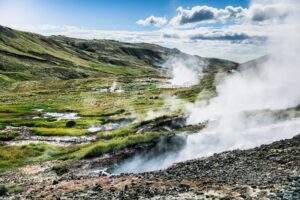
The researchers will investigate SuperHot Rock (SHR) geothermal resources across multiple countries to advance clean energy development. They will study demonstration sites in the United States, Iceland, New Zealand, Japan, and Canada, comparing their geological features and extraction technologies. The team will also examine sites in Italy, Mexico, and Kenya to validate their findings. By analyzing similarities and differences between locations, scientists will identify the best practices for developing these extremely hot underground resources. This collaboration with Clean Air Task Force (CATF) will help reduce costs and risks associated with exploring and extracting geothermal energy from SuperHot Rock formations, ultimately supporting cleaner energy solutions worldwide. This effort follows on a successful 2024 project with CATF, which performed a literature review to determine the characteristics of potential SHR sites and technologies needed to constrain these properties across a range of geologic settings.
Cornell: Seth Avram Saltiel (Cornell Duffield Engineering/Earth & Atmospheric Sciences)
Clean Air Task Force (CATF): Angela Seligman (Senior Geoscientist), Terra Rogers (Superhot Rock Geothermal Program Director)
Analysis of Carbon Dioxide Removal Policy Impact Pathways
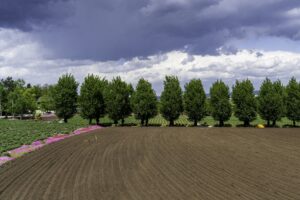
Cornell researchers study how to grow carbon removal technologies across the United States. They will work with the Clean Air Task Force to find the best policies that can help the country remove one gigaton of carbon dioxide each year by 2050. The team will use computer models to test different approaches, including planting trees, capturing carbon from farms, and using machines that pull carbon from the air. They will figure out which government policies work best while costing taxpayers the least money. The scientists will examine options like government funding, research support, and business incentives to make these technologies more popular. Their findings will help lawmakers create better climate change solutions and build support for carbon removal programs.
Cornell: Fengqi You (Cornell Duffield Engineering / Chemical and Biomolecular Engineering)
Clean Air Task Force (CATF): John Thompson (Technology and Markets Director), Darryle Ulma (Associate Director, Industrial Innovation)
Sorghum for Sustainability? Enabling Water Savings From Crop Switching in Kansas
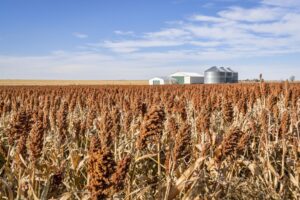
The research team will address water scarcity challenges in Kansas, a major agricultural region where farming contributes $57 billion annually and employs over 140,000 people. The project examines how farmers can switch from growing corn to sorghum, a crop that requires significantly less water, to help conserve this precious resource during increasingly severe droughts. Since corn typically generates higher profits than sorghum, the researcher is developing market incentives and financial support systems that would make crop switching economically viable for farmers. Working directly with farming communities and agricultural supply chain partners, the team aims to create practical solutions that will help Kansas maintain its agricultural productivity while adapting to climate change and water limitations. The ultimate goal is to demonstrate that water-efficient crops like sorghum can provide both environmental benefits and economic stability for rural communities facing mounting water stress.
Cornell: Chuan Liao (Cornell CALS / Ashley School of Global Development and the Environment / Global Development)
Environmental Defense Fund (EDF): Alison Eagle (Senior Scientist, Climate-Smart Agriculture), Leah Beaulac (Senior Manager, Climate Resilient Water Systems)
Harnessing the Power of Electrified Transportation Systems as Virtual Power Plants Through AI-driven Learning, Optimization, and Control

Energy storage is critical to decarbonizing the power grid, but high capital costs have limited large-scale deployment. The rapid adoption of plug-in electric vehicles (EVs) offers a transformative alternative: using EV batteries as distributed, mobile energy storage. Through bidirectional charging, millions of EVs can collectively function as a massive virtual battery—absorbing surplus renewable energy and supplying power during shortages. This project leverages artificial intelligence to enable the real-time coordination of EV charging at scale. By aligning EV flexibility with grid needs and renewable supply, the research enhances grid resilience, supports clean energy integration, and creates new revenue streams for EV owners, accelerating decarbonization of both power and transportation sectors.
Cornell: Eilyan Bitar (Cornell Duffield Engineering/Electrical and Computer Engineering)
Rocky Mountain Institute (RMI): Ben Shapiro (Principal)
Additional Partner: New York State Electric and Gas (NYSEG)
Power-to-X Pathways for a Decarbonized Energy Future: An Integrated Analysis and Decision-Making Framework
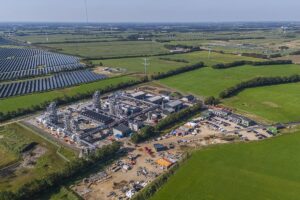
Power-to-X (PtX) pathways convert electricity into e-fuels like hydrogen, ammonia, and methanol. These chemicals and fuels are necessary to decarbonize hard-to-abate sectors like industry and heavy transport, and they provide long-duration energy storage for electricity generation. Each PtX technology pathway offers benefits but faces challenges related to technology readiness, infrastructure, and sector-specific suitability. Existing power system planning models, such as GenX, GE Maps, and SWITCH, focus on power system details but often abstract the chemical processes critical to PtX. Conversely, most PtX research abstracts the details of power system operations, creating a gap that hinders accurate technological path comparisons. This collaborative project between Cornell University and Environmental Defense Fund researchers aims to bridge the gap by integrating detailed sectoral and process modelling for the most promising PtX technology pathways within the power system capacity expansion platform, SWITCH. By doing so, researchers will facilitate more accurate cost comparisons among technologies across various scenarios.
Cornell: Lindsay Anderson (Cornell CALS, Biological and Environmental Engineering)
EDF: Thomas Brindle, Luis Fernández Intriago
Collaborator: Jerry Murphy (University College of Cork, Ireland)
Coupling Critical Flow Physics to Biogeochemistry, Policy, and Local Communities for the Resiliency and Restoration of Mangroves and Their Blue Carbon
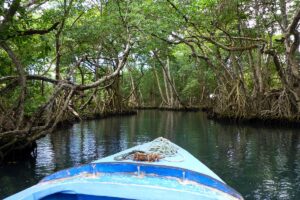
Mangroves provide a host of climate and ecosystem services to coastal communities, including biodiversity, fish nursery habitat, protection from flooding and storm surge, and carbon capture and storage. More than half of the world’s mangrove ecosystems are at risk of collapse by 2050, under the pressures of unsustainable development and climate change. Meanwhile, government investments and corporate purchases on the voluntary carbon market have created increasing demand for offset projects based on mangrove ecosystem restoration. Most of these restoration projects depend on planting mangrove propagules for reforestation — a single-pronged approach that has led to high failure rates. New evidence suggests planting efforts may be more successful when coupled or even replaced with ecological engineering that aims to restore natural tidal hydrology that has been disrupted by blockages or channel cuts. Cornell and Environmental Defense Fund researchers will leverage environmental fluid mechanics, biogeochemistry, hydrodynamics, climate change-induced sea level rise, and community stewardship of mangrove forests to guide effective and lasting mangrove restoration.
Cornell: Todd Cowen, Seth Schweitzer, and Johann Delgado (all Cornell Engineering, Civil & Environmental Engineering)
EDF: Gemma Carroll, Kristin Kleisner
Collaborator: Alejandro Orfila (Director of the Mediterranean Institute for Advanced Studies, IMEDEA)
Providing Local and Regional Agencies with Air Quality and Health Impacts from Dust and Wildfire Aerosol Changes Due to Climate and Land Use Change
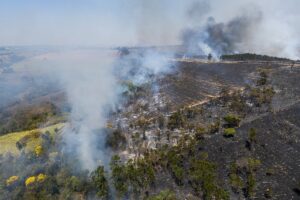
Researchers seek to understand how health impacts from wildfire and dust aerosols have changed over time and how those impacts may change in the future, especially in Latin America. In this collaborative project between Cornell University and Environmental Defense Fund, researchers will first estimate fine particle air pollution concentrations from wildfires, agricultural fires, fossil fuels, and desert and agricultural dust. They’ll use the Community Earth System Model (CESM2.1), to estimate fine particle concentrations in preindustrial (1850), present day (2020) and future time periods (2030, 2040, and 2050). Recent data on aerosol pollution will then be used to improve the model. Researchers will also calculate mortality, respiratory disease, and economic impact due to aerosol pollution. Throughout the research, they will engage with policy makers to tailor information to their needs, leveraging other EDF efforts such as AirTracker and FireSAT. Outcomes could include policies that reduce agricultural burning, or aiding communities in planning for poor air quality days.
Cornell: Natalie Mahowald (Cornell Engineering, Earth & Atmospheric Sciences), Alistair Hayden (Veterinary College, Public & Ecosystem Health)
EDF: Fiona Lo
Overcoming Baseless Baselines to Drive GHG Mitigation in Rice Systems

Rice growers traditionally flood their paddies to keep down weeds, but this agricultural practice creates methane, a potent climate-warming gas. India has committed to reduce its greenhouse gas emissions by 45% by 2030 and to achieve ‘net zero’ by 2070, and agrifood systems in India are responsible for more than 30% of national emissions. These factors have led to a proliferation of private capital in the voluntary carbon market for Indian agriculture, and a focus on technologies such as alternate wetting and drying in rice paddies. However, in Eastern India, diverse hydrologic conditions in farmer fields, heavy monsoon rains, and poor drainage hamper such efforts. Regional and national baseline GHG emission estimates for rice in India do not adequately capture this hydrologic diversity. The implications of poor baselines are profound: most companies and state governments are supporting ineffective interventions unresponsive to underlying baseline hydrologic conditions, often leading to a focus on the wrong rice geographies and, where GHG emissions are truly high, ineffective or inappropriate interventions. The correct prescription requires the right diagnosis. This project between Cornell University and Environmental Defense Fund researchers aims to deliver conceptual clarity on how GHG baselines differ in India’s rice belt and how mitigation solutions can be effectively matched to varied production contexts.
Cornell: Andrew McDonald and Hari Sankar Nayak (both Cornell CALS, School of Integrative Plant Science)
EDF: Alison Eagle
The Cornell Dairy Methane Benchmark: Validating Data to Support Climate Mitigation in Livestock
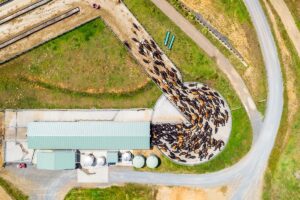
With the U.S. dairy industry pledging to achieve Net Zero by 2050, there is an urgent need for scalable methane monitoring systems, as effective mitigation strategies depend on accurately and consistently tracking emissions over time. The primary goal of this project is to evaluate the feasibility of using satellite and aircraft-based methane data as a tool to monitor dairy farming emissions and inform policy development and on-farm decision making. Data will be gathered from the Cornell Nutrient Management Spear Program farms, from EDF’s MethaneAIR, which measures methane emissions from a specially equipped jet, from Carbon Mapper, and from the United Nations Environment Programme’s International Methane Emissions Observatory. To ensure practical impact, project partners will engage stakeholders through workshops with dairy farmers, industry experts, and policymakers.
This project is part of a dairy sustainability research program jointly managed by Cornell Atkinson Center for Sustainability, The Nature Conservancy, Clean Air Task Force, and Environmental Defense Fund.
Cornell: Miel Hostens, Joseph McFadden, Quirine Ketterings (All Cornell CALS/Animal Science)
CATF: Fernanda Ferreira
EDF: Joe Rudek
Interventions in Early Life of Dairy Calves to Reduce Methane Emissions in Adulthood
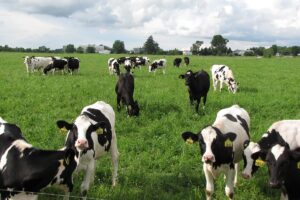
Around 40% of dairy operations in the US get their heifer cow replacements from large calf-raising facilities, many of which limit their feedings to one gallon of milk or milk replacer twice daily. Previous studies have shown that calves fed additional milk or milk replacer produced more milk during their first lactation, experienced less disease, gained more weight, and emitted less methane than calves fed lower nutritional plans. This project will study 122 dairy calves, half fed a diet similar to that fed in large calf ranches and half fed a higher-energy diet. Researchers will test the effects of improved feeding plans for dairy calves and measure their methane intensity at different time points post-weaning with a greenhouse gas sensor.
This project is part of a dairy sustainability research program jointly managed by Cornell Atkinson Center for Sustainability, The Nature Conservancy, Clean Air Task Force, and Environmental Defense Fund.
Cornell: Francisco Leal Yepes (Vet School, Population Medicine and Diagnostic Sciences)
CATF: Fernanda Ferreira
EDF: Peri Rosenstein
Rapid Screening of Manure Storage Additives to Reduce Emissions and Enhance Fertilizer Benefits
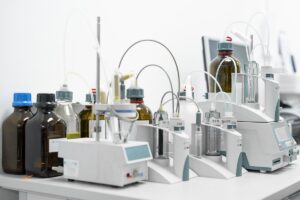
In the U.S., dairy manure storage protects water quality and provides an important fertilizer source for farmers’ fields, but it also emits significant amounts of methane, a potent greenhouse gas, and ammonia. Direct manure additives are increasingly marketed to dairy producers as a silver bullet fix for these emissions, boasting up to 90% reductions in methane and ammonia, but most of these performance claims have not been substantiated by a neutral third party. Researchers will test commercial manure additives and develop a rigorous screening protocol to identify other promising manure additives for testing. They will share findings with dairy farmers and policymakers to facilitate wider dairy producer adoption of effective products.
This project is part of a dairy sustainability research program jointly managed by Cornell Atkinson Center for Sustainability, The Nature Conservancy, Clean Air Task Force, and Environmental Defense Fund.
Cornell: Jason Oliver (CALS, Animal Science)
CATF: Fernanda Ferreira, Stephanie Herbstritt
EDF: Joe Rudek
TNC: Partha Ray, Alisha Staggs
Market Opportunities to Reduce Dairy Farm Methane Emissions: Assessing Producer and Consumer Acceptance of Feed Additives
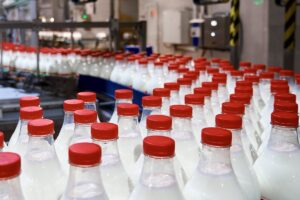
Studies suggest that, although feed additives may provide emission reduction in dairy cattle, farmer and consumer acceptance of these products is unclear. In order to examine the market and methane reduction potential of feed additives in the U.S. dairy industry, this research will examine consumers and dairy farmer views of these technologies. Researchers will assess consumer acceptance and willingness to pay for dairy products from cows fed diets containing methane-reducing ingredients, such as 3-nitrooxypropanol (3NOP), seaweed, tannins, and essential oils. Researchers will also analyze dairy producer attitudes and willingness to supply milk produced using methane-reducing feed additives. Together, these will reveal the market potential for reducing dairy cow methane emissions using feed additives and support the development of market-based and policy mechanisms to accelerate adoption.
This project is part of a dairy sustainability research program jointly managed by Cornell Atkinson Center for Sustainability, The Nature Conservancy, Clean Air Task Force, and Environmental Defense Fund.
Cornell: Christopher Wolf (SC Johnson/Dyson), Wendong Zhang (SC Johnson/Dyson), Mike Van Amburgh (Cornell CALS/Animal Science)
CATF: Fernanda Ferreira
EDF: Joe Rudek
TNC: Partha Ray, Alisha Staggs
Understanding Biogas Utilization Pathways and State-Level Policies from US Dairy Digesters
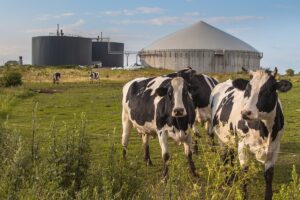
Dairy manure digesters capture methane from manure that would otherwise have been emitted in the form of biogas. This biogas can be used to generate electricity on the farm, it can be upgraded to renewable natural gas (which can be sold for commercial use off-farm), or it can be flared. The emission-saving potential of digesters depends on how the biogas is used and on the surrounding infrastructure for processing and transport of biogas end products, fugitive emissions, and new co-pollutants. To enable maximum emissions reductions and clarity among diverse policies, researchers will create an inventory of federal and state-level policies for anaerobic digesters, and a map of potential locations for future digesters, taking into account different biogas utilization pathways.
This project is part of a dairy sustainability research program jointly managed by Cornell Atkinson Center for Sustainability, The Nature Conservancy, Clean Air Task Force, and Environmental Defense Fund.
Cornell: Wendong Zhang (SC Johnson/Dyson), Christopher Wolf (SC Johnson/Dyson), Lauren Ray (Cornell CALS/Animal Science)
EDF: Akin Olumoroti
TNC: Partha Ray, Alisha Staggs
Analysis of Carbon Dioxide Removal Policy Impact Pathways
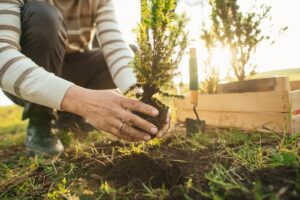
As the urgency to address climate change grows, this project focuses on evaluating policy pathways to scale up carbon dioxide removal (CDR) technologies in the United States, aiming to support the target of one gigaton of annual CDR capacity by mid-century. In collaboration with the Clean Air Task Force (CATF), Cornell researchers will use advanced modeling tools to analyze the cost-effectiveness and impact of various CDR policy options, including nature-based (e.g., afforestation, soil carbon sequestration), hybrid (e.g., biomass carbon removal and storage), and engineered solutions (e.g., direct air capture). This work will identify the most promising policy levers—such as direct public investment, R&D support, and demand-side incentives—needed to maximize CDR feasibility and scalability while minimizing taxpayer costs. The outcomes of this analysis will inform policymakers, support legislative development, and build coalitions for advancing CDR, ultimately contributing to effective carbon management and sustainable decarbonization strategies.
Cornell: Fengqi You (Cornell Engineering/Mechanical and Aerospace Engineering)
Partner: Clean Air Task Force (CATF)
Modernizing Existing Dams to Meet Energy and Environmental Objectives in the Western Balkans
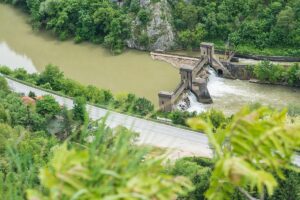
As Western Balkan countries work to decarbonize their economies, solar and wind energy are projected to grow rapidly. Aging hydropower plants in the Western Balkans will also be needed to stabilize the grid when solar and wind output is low; however, many of these facilities lack modern environmental safeguards to minimize disruptions to fish migration, natural flow regimes, and sediment transport, with serious consequences for freshwater biodiversity. This collaborative project between Cornell University and The Nature Conservancy researchers will assess how much of the existing fleet can be modernized to meet both energy balancing needs and contemporary environmental objectives. By integrating repowering and retrofitting scenarios, researchers aim to quantify trade-offs between energy generation, biodiversity protection, and projected costs.
Cornell: Alexander Flecker (Cornell CALS/Ecology and Evolutionary Biology), Carla Gomes (Bowers College of Computing and Information Science)
TNC: Katie Kennedy, Tara Moberg, Mate Zec, Igor Vejnovic
Collaborator: Rafael M. Almeida (Indiana University and former Cornell Atkinson Postdoc)
Simulating Capacity for Ecosystem Services from Solar Facilities on Abandoned Minelands in Southern Appalachia
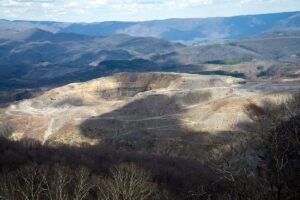
The Starfire Renewable Energy Center is being built in Appalachia, at one of the largest former coal mines in the country. Siting renewable energy infrastructure on marginalized lands, such as minelands and brownfield sites, is a broadly popular idea; however, the technical expertise to realize co-benefits such as natural hazard risk mitigation and solar grazing is lacking. This collaborative project between Cornell University and The Nature Conservancy researchers seeks to inform, through the 3C’s (climate, conservation, and community) the site design and permitting of the project. Starfire offers a unique opportunity to simulate restoration pathways to achieve multiple sustainability objectives, allowing for optimization of operational solar facilities on minelands to benefit rural communities.
Cornell: Steve Grodsky, Ginger Allington (both Cornell CALS/Natural Resources and the Environment)
TNC: Liz Kalies, Nathan Cummins
Untangling the Causes of Tree Mortality with Remote Sensing to Increase Urban Climate Resilience

Trees cool cities, reducing heat-related disease and death. A growing recognition of trees’ benefits to public health and climate resilience has prompted cities around the world to set ambitious targets for tree canopy coverage. Achieving these goals will require protection and care of existing trees, and planting of new ones in ways that maximize their growth and long-term survival. Current field-based strategies to assess tree health and the causes of mortality are labor-intensive, which limits their usage at larger scales. Emerging remote-sensing technologies could better quantify tree mortality and its causes affordably across large areas. This project — a collaborative effort between scientists at Cornell University and the Nature Conservancy — will create comprehensive models of tree mortality across New York City by combining several complementary remote sensing-derived datasets that the researchers have developed. The work will address knowledge gaps and inform policies in urban planning and forestry to enhance the health of trees and therefore people.
Cornell: Daniel Katz (Cornell CALS/School of Integrative Plant Science)
TNC: Michael Treglia
Accelerating Farmer Adoption of Conservation Practices: Economic Experiment Evidence that Reduce Hypothetical Bias
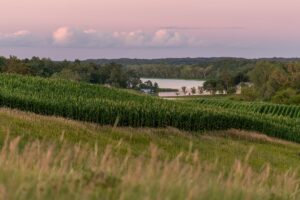
Nearly half of all lakes in the U.S. suffer from nutrient pollution, negatively impacting drinking water and recreation for millions of people. Saturated buffers – areas of perennial vegetation between agricultural fields and waterways – can improve water quality outcomes by minimizing soil and nutrient erosion. Cost and effort to install such buffers limit farmer adoption; targeted incentives help address these barriers. This collaborative project led by researchers at Cornell University and The Nature Conservancy seeks to generate accurate estimates of Midwestern farmers’ willingness to adopt conservation practices, and to identify the leakiest fields that will generate the greatest bang for the buck. These findings will inform policy and program recommendations to support sustainable agricultural systems and regional water quality improvement.
Cornell: Catherine Kling and Wendong Zhang (both Dyson/Applied Economics and Management)
TNC: Randy Dell, Emily Zimmerman, Shamitha Keerthi
Collaborator: Gregory Howard (East Carolina University)
Guiding Biodiversity Protection & Aquaculture Siting in Lake Tanganyika Using eDNA
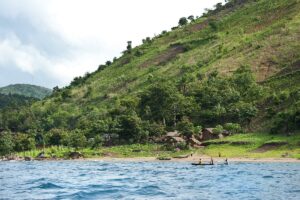
Lake Tanganyika in eastern Africa is a global hotspot of freshwater biodiversity, hosting more than 2,000 aquatic species. The lake is also an important source of human nutrients, with a growing aquaculture industry. Intense fishing pressure, tilapia farms and nearby deforestation all threaten the lake’s biodiversity. Ecosystem protection efforts, such as fishery management zones and reserves, are localized efforts, hindering lake-wide conservation planning. This project will leverage environmental DNA (eDNA) – low-impact genetic testing of water samples – to survey species across the Tanganyika coastline. Pilot work by scientists at Cornell University and The Nature Conservancy demonstrated the effectiveness of this approach, and in this next phase researchers will broaden their sampling to the entire Tanzanian coast (420 km).
Cornell: Peter McIntyre and Jared Freeman (both Cornell CALS/Natural Resources and the Environment)
TNC: Colin Apse, Tuyeni Mwampamba
What Does ‘Well Connected’ Mean in the Context of Target 3 of the Global Biodiversity Framework?
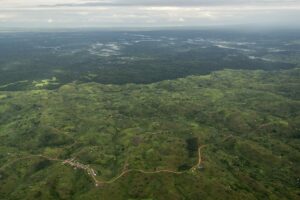
The United Nations’ 2030 biodiversity goals call for conserving at least 30% of land and sea ecosystems. To address habitat fragmentation and support species migration, protected areas should be “well-connected,” per the goals, though that phrase is not defined. This project seeks to provide quantitative guidance to countries and others on interpreting whether their protected areas are “well-connected.” Researchers at Cornell University and The Nature Conservancy will develop statistical thresholds for indicators that classify protected-area connectivity as low, medium, or high, at the individual area level and at landscape levels. They will also assess the applicability of these indicators and thresholds through national case studies.
Cornell: Gary Tabor (Cornell CALS/Natural Resources and the Environment)
TNC: Erin Poor, Kimberly Hall, Carrie Schloss, Aaron Jones
Collaborators: Annika Keeley (Center for Large Landscape Conservation)
Leveraging OpenET to Enhance and Scale Data-Driven Agricultural Water Conservation
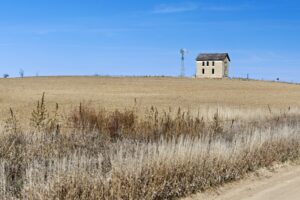
Researchers will explore growing water scarcity across the western United States, where climate change and overuse have created severe shortages threatening agriculture and ecosystems. The project focuses on improving water conservation programs in Kansas, Oregon, and Texas by developing best practices for using OpenET, a satellite-based technology that measures water usage from space. Working with local stakeholders, the researcher examines how OpenET can effectively track water savings from various conservation strategies like crop-switching and improved irrigation systems. The goal is to help agricultural and groundwater management programs better measure their success and identify the most effective conservation approaches. By understanding the challenges and opportunities of using OpenET data throughout all phases of conservation programs, this research aims to promote wider adoption of this monitoring tool for water management.
Cornell: Yun Yang (Cornell CALS/School of Integrative Plant Science, Soil and Crop Sciences Section)
Environmental Defense Fund (EDF): Rachel O’Connor (Senior Manager, Climate Resilient Water Systems), Maurice Hall (Senior Advisor, Climate Resilient Water Systems)
Community Engagement for Renewable Energy Developer
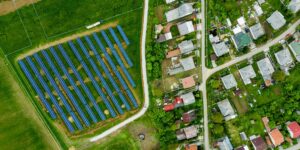
A perfect storm is brewing for New York State, raising questions about how it will navigate accelerating energy transitions. As the local and global impacts of climate change intensify, demand for renewable energy is growing rapidly across the state. This surge has attracted many new, often inexperienced developers eager to expand solar and wind infrastructure. At the same time, local communities are grappling with the consequences for their energy futures. Some remain shaped by past conflicts over hydraulic fracturing, while others face ongoing disputes surrounding renewable installations. What will happen as pressure mounts to deploy renewable energy faster and at larger scales?
Cornell: Katherine McComas (Cornell CALS/Communication)
Alliance for Clean Energy New York: Marguerite Wells
Climate-Resilient Energy Systems: Integrating Power System Analysis with Community-Based Insights
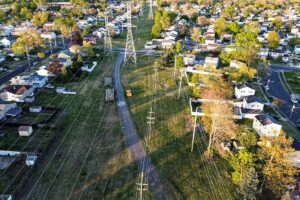
Climate policies often require large long-term investments in clean energy technologies, but decision-making is complicated by trade-offs between costs, emissions, and system reliability. To combat that challenge, Cornell researchers are developing large-scale economic modeling with detailed operational analysis to create a new framework and modelling tool that can better guide both infrastructure investments and day-to-day system operations. The tool is being piloted through a New York case study and designed as an interactive platform for stakeholders to explore different pathways and trade-offs in the energy transition. Additionally, the proposed tool will support a “table-top” platform to allow stakeholders to explore key questions and the influence of preferences on outcomes and trade-offs.
Cornell: Lindsay Anderson (Cornell CALS/Biological and Environmental Engineering)
Partner: CATF
Climate-Sensitive Risk Assessment for Targeted Prevention of Cardiometabolic Diseases

Prevalence of cardiometabolic diseases (CMDs) has risen steadily over the past 30 years, now accounting for over 30% of deaths worldwide. Risk factors include genetics, patient behavior, and environmental exposure. Climate-associated exposures – such as air pollution, extreme heat, natural disasters, and climate migration – have emerged as major concerns for cardiometabolic health. This project will create new climate vulnerability indices that are specific to CMDs, such as kidney disease, atherosclerosis, and heart failure. We will utilize a dataset of over 1.3 million patients from the Houston Methodist Health System to develop CMD-specific indices that can accurately predict negative health outcomes related to CMDs based on climate and weather factors.
Cornell: Arnab Ghosh (Weill Cornell), Khurram Nasir (Weill Cornell and Houston Methodist), Sadeer Al-Kindi (Weill Cornell and Houston Methodist)
EDF: Grace Lewis
Creating a Sustainable Agricultural System in the Mississippi River Basin with Natural Infrastructure: The Economic Costs and Benefits
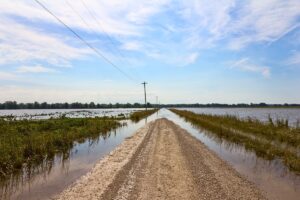
The Mississippi River Basin, which hosts 240 million acres of cropland, is increasingly vulnerable to catastrophic flooding. In addition, the EPA reports that 35-40% of lakes have excess nitrogen and phosphorus, resulting in toxic algal blooms, fish mortality, and dead zones. Natural infrastructure, such as wetlands, buffers, and floodplain restoration, can significantly reduce flooding and loss of productive cropland while improving water quality. Researchers will quantify the economic costs and benefits of integrating natural infrastructure across the basin landscape, in support of policy planning and advocacy. They’ll also assess how much optimal placement of natural infrastructure could reduce economic damages from nutrient pollution and flooding, and whether natural infrastructure could improve retention of carbon in agricultural soils – critical for soil health and climate mitigation.
Cornell: Mainul Hoque, Applied Economics and Policy
EDF: Will McDow
Developing a Modeling Framework to Explore the Potential Value of an Environmental Water Manager for California’s Sacramento Valley
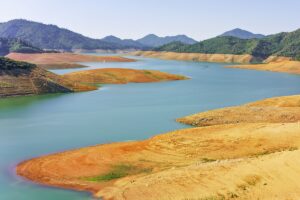
In response to California’s growing water crisis, the state has invested billions of dollars into water storage, habitat resilience, and protection of water bodies. In Nov. 2023, the state fast-tracked the Sites project, a pumped-storage reservoir off the Sacramento River that includes 17% of storage space reserved for environmental needs. This project will build on work led by EDF’s Climate Resilient Water Systems group to advance the concept of an Environmental Water Manager. Researchers will develop modeling tools to test flexible decision-making frameworks that would enable the water manager to respond quickly to real-time conditions, think more broadly about environmental water budgets, and adapt management across the Sacramento system.
Cornell: Patrick Reed (Engineering/Civil and Environmental Engineering)
EDF: Gopal Penny
Assessing the Scale, Longevity and Equity of Methane Emission Reduction from Dairy Anaerobic Digester Systems
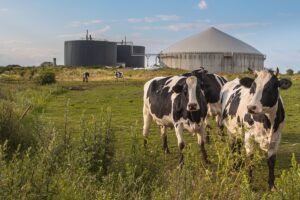
Anaerobic digestion on dairy farms is a climate mitigation strategy whereby methane emissions from dairy manure are captured for energy use. Such systems offer various economic and environmental co-benefits, but are long‐term investments that require both substantial upfront costs and reliable connection into the existing electricity or natural gas network. Using spatial information on gas infrastructure and farm-related variables, researchers will study the incentives and barriers behind farmer adoption of anaerobic digesters. This will consist of documenting existing and proposed incentive structures in the U.S. and Europe, including private carbon credit programs, and public cost-sharing and tax-incentive programs; surveying dairy farmers who have adopted and then abandoned their digester systems; and interviewing agricultural lenders, representatives from dairy producer associations, and energy companies to better understand how to sustainably finance anaerobic digesters and spur adoption.
Cornell: Wendong Zhang (Dyson School)
EDF: David McLaughlin
Public Risk Pooling: Opportunities to Drive Climate Adaptation
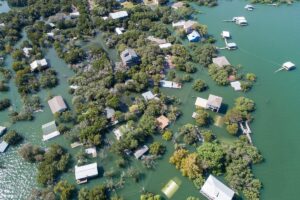
Climate change and land use management challenges have created a crisis in U.S. property insurance markets: more frequent, more extreme storms have pushed several private insurers to insolvency. In many states, public insurance markets are a (costlier and less comprehensive) resource for homeowners who can’t access private markets. Public insurance markets are well positioned to drive risk reduction. This project will identify the levers public insurance programs use to support risk reduction, barriers to expanding their use, and paths of policy reform to equitably increase the resilience of areas facing growing risk from natural hazards, while simultaneously stabilizing insurance markets.
Cornell: John Zinda (Cornell CALS/Global Development)
EDF: Carolyn Kousky
Identifying Technology and Knowledge Gaps for Characterization of SuperHot Rock Geothermal Reservoirs to Better Inform Policy Pathways Toward New Research, Development, and Demonstration
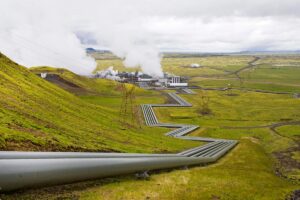
The project involves a collaboration between Cornell Atkinson Center for Sustainability and the Clean Air Task Force (CATF) to advance the development of SuperHot Rock (SHR) geothermal reservoirs. It aims to leverage existing knowledge and ongoing work to identify priority areas for federal research investments in SHR technology. The project will focus on summarizing state-of-the-art techniques, identifying knowledge gaps, and developing heat roadmaps.
Cornell: Seth Avram Saltiel (Engineering/Earth & Atmospheric Sciences)
CATF: Terra Rogers (SuperHot Rock Energy/Program Director)
Strategic and Viable Interventions in Agricultural Greenhouse Gas Emissions Management for a Sustainable Food and Climate Future
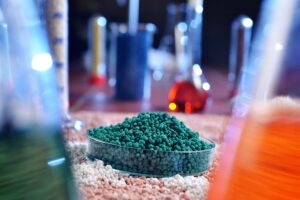
Cornell and EDF partners seek to understand the life-cycle greenhouse gas impacts of existing fertilizer production methods, and to assess emerging technologies to determine how they might help reduce runoff and climate impacts. Previous efforts have focused on industrial production of fertilizers or on-farm fertilizer practices. This project seeks to make a holistic assessment of impacts through the entire supply chain.
Cornell: Greeshma Gadikota (Engineering/Civil and Environmental Engineering)
EDF: Alison Eagle, Ramon Alvarez
Evidence-based Urban Greening Programs and Health: A Mixed Methods Approach to Improving Environmental Justice
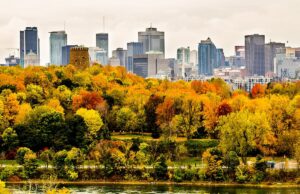
The research team plans to develop a framework to connect urban forestry initiatives to climate and community health outcomes. Using data from the National Weather Service and the New York State Department of Health, they will predict block-level ambient heat exposure in New York City from 2015-2022, and compare that to heat-related emergency department visits and hospitalizations. They’ll also conduct interviews with urban foresters, public health officials, community organizations, and other stakeholders to better understand the practical, economic, and policy-related considerations of urban tree planting.
Cornell: Arnab Ghosh (Weill Cornell Medical College), Dan Katz (Cornell CALS/School of Integrative Plant Science), Qi Li (Engineering/Civil and Environmental Engineering)
EDF: Fiona Lo, Julia Gohlike, Lesa Walker (EDF consultant)
USDA Urban Forest Service: Alex Young
Valuation of Biodiversity and Ecosystem Services in the Agriculture-Conservation-Solar Energy Matrix
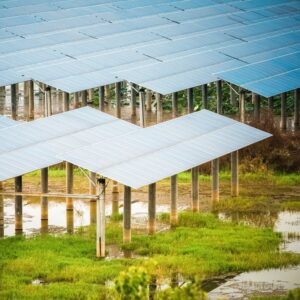
Solar energy provides a necessary means by which to mitigate climate change and to facilitate the energy transition from fossil fuels to renewable energy globally. However, solar energy development is a major driver of land-use change and there currently exist great potential for land-use competition between solar energy development and agriculture. This project will inform sustainable solar energy development in New York by elucidating key biodiversity and ecosystem-service based values of lands in the land-use matrix of agriculture, solar energy, and conservation.
Cornell: Steve Grodsky (Cornell CALS/Natural Resources and the Environment)
TNC: Liz Kalies
Evaluation of State and Federal Policies for Impact on Water Quality
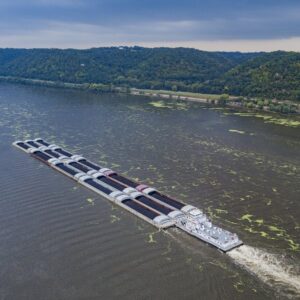
Despite decades and billions of dollars to support conservation, nutrient loads continue to increase while adoption of conservation practices remains relatively low, limiting the ability to meet freshwater biodiversity goals in keystone basins such as the Mississippi River and Great Lakes. This collaboration brings together expertise in policy and environmental economics at Cornell University and the University of Minnesota (UMN), with the on-the-ground expertise and relationships of TNC in conservation delivery and state legislative engagement.
Cornell: Cathy Kling (Dyson School)
UMN: Bonnie Keeler
TNC: Randy Dell
Manure Mesocosms: Test Systems to Inform Sustainable Dairy Manure Management
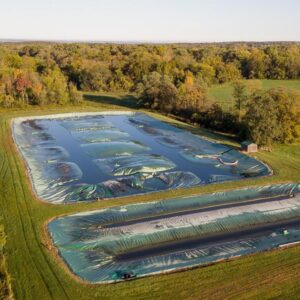
The intensification of dairy operations has improved the efficiency of dairy production and increased the production of high-quality milk, but has also led to unintended environmental impacts, like increased greenhouse gas emissions. As livestock production continues to intensify there is increasing need to evaluate scalable, low-capital cost solutions that improve the sustainable management of manure in long-term storage. The researchers will establish dairy manure mesocosms where manure additives, manure treatments, and management can be experimentally evaluated for their ability to reduce emissions from long-term manure storage and their economic feasibility. They will leverage this partnership with TNC to expedite the rollout of practical solutions.
Cornell: Jason Oliver, Lauren Ray (Both Cornell CALS/Animal Science)
TNC: Alisha Staggs, Partha Ray
The Climate Change Housing Deficit: A Scalable Tool to Justify Zoning Reforms in Flood-Prone Areas
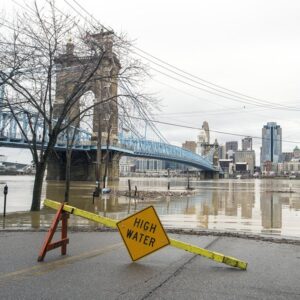
As the global climate crisis accelerates, the nation’s developed waterfronts are at particular risk from its worsening impacts. More than one million people in the tri-state metropolitan region currently live in flood-prone areas, about half in dense urban areas – that total number is expected to double by 2050. About one-third of this at-risk population lives in conditions that make them especially vulnerable, including those with low-incomes, non-native English speakers, the elderly, and the very young. The researchers will to conduct a collaborative research and advocacy project to better understand the impacts of climate change on housing stock in New York City, Long Island, and Westchester County; develop actionable and scalable policy solutions to create more housing in climate-appropriate locations; and create a communications and advocacy strategy to implement proposed policy solutions.
Cornell: Sara Bronin (Art, Architecture, and Planning/City and Regional Planning)
Regional Plan Association (RPA): Melissa Kaplan-Macey, Moses Gates, Robert Freudenberg
Scaling the Biodiversity Progress Index to Central America (IIF Momentum Funding)

This project will develop and provide accessible, country-specific data products on biodiversity that meet local information needs, inform policy, and engage conservation decision-makers across Central America.
Cornell: Courtney Davis (Lab of Ornithology)
External Partners: Nestlé, ECOM Sustainable Management Services (ECOM-SMS), Nespresso, Wildlife Conservation Society
Integrating Policy, Finance, and Hyperlocal Building Energy Modeling
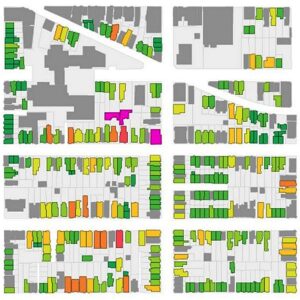
In 2020, buildings and construction accounted for 37% of global greenhouse gas emissions. Their decarbonization is an urgent, massive, cross-disciplinary challenge that requires immediate attention to limit the adverse effects of climate change. The researchers will create a novel methodology for scenario-driven urban energy simulations, incorporating future climate, finance, policy models, and sustainable technology adoption predictions to deliver a web-browser-based planning tool tailored to city stakeholder needs.
Cornell: Timur Dogan (Art, Architecture, and Planning/Architecture)
RMI: Stephen Abbott, Ryan Shea, Jingyi Tang
Understanding the Spread of Aedes aegypti Mosquitoes and Dengue Virus in the Peruvian Amazon to Effect Positive Public Health Change (IIF Momentum Funding)
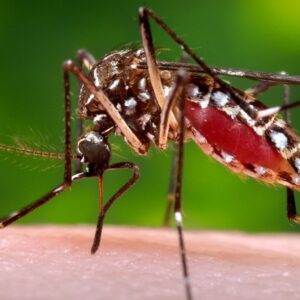
Aedes aegypti is an invasive mosquito species with a wide distribution around the world. It is the main vector of several diseases, including dengue, a viral infection causing severe disease, and nearly 40,000 deaths per year. In the northern Peruvian Amazon, these mosquitoes have increasingly developed insecticide resistance. This project will engage community health workers in the interpretation of resistance data, train them on mosquito-borne diseases, and translate related scientific publication(s) into Spanish.
Cornell Investigator: Laura Harrington, Entomology
ClimateRice Initiative
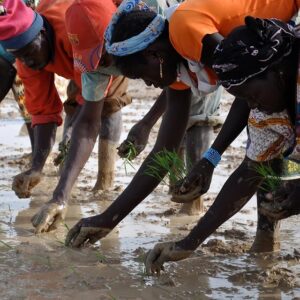
To successfully address climate change, we must rapidly adopt a different approach to growing rice, a daily staple for more than half of the world’s population. Rice accounts for 12% of anthropogenic methane emissions and 33% of global freshwater withdrawals. System of Rice Intensification (SRI) is a proven alternative for rice farming, and is practiced today in more than 60 countries by about 5% of rice farmers. ClimateRice is a collaborative initiative between Cornell’s Climate-Resilient Farming Systems Program, Department of Global Development at Cornell CALS and CarbonFarm, a technology start-up developing an innovative satellite-based carbon finance mechanism for rice.
Cornell Investigator: Erika Styger (Cornell CALS/Global Development)
CarbonFarm: Vassily Carantino
Climate-controlled Cattle Respiration Chambers
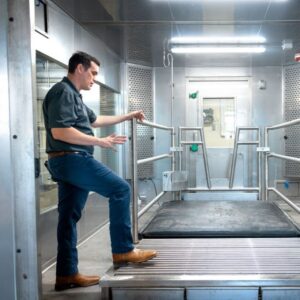
Climate-controlled animal respiration stalls (the first in the U.S.) will allow researchers to definitively measure, verify, and monitor methane and other gas emissions from cows – information that will support a slate of investigations aimed at improving the sustainability and productivity of farms around the world. The chambers monitor oxygen consumption and methane, CO2, and hydrogen emissions in real time. Researchers may put individual cows in a chamber in order to get an absolute measure of gases consumed and produced.
Cornell: Joe McFadden (Cornell CALS/Animal Science)
Supported by: Cargill, Genesee Valley Regional Market Authority, Balchem Corporation, New York State Department of Agriculture and Markets
Streamlining Assessment of Enteric Methane Inhibiting Drugs & Feed Additives for FDA Approval
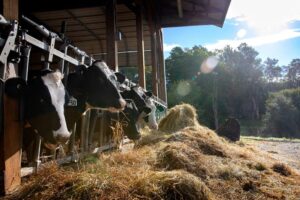
Researchers are working collaboratively to address key barriers to timely adoption at scale of animal drugs and food additives that reduce methane production. This project will leverage Cornell expertise in livestock nutrition and management, available research and research capacity, and experience with regulatory approval requirements, plus EDF proficiencies in stakeholder collaboration and policy advocacy to address barriers related to regulatory approval.
Cornell : Mike Van Amburgh (Cornell CALS/Animal Science), Daryl Nydam (Veterinary College/Population Medicine + Diagnostic Sciences), Thomas Overton (Cornell CALS/Animal Science) Joseph McFadden (Cornell CALS/Animal Science), Kristan Reed (Cornell CALS/Animal Science), Jefferson Tester (Engineering/Chemical + Biomolecular Engineering), Robert Howarth (Cornell CALS/Ecology + Evolutionary Biology), Peter Wright (Cornell CALS/Animal Science), Xingen Li (Cornell CALS/Animal Science)
EDF: Katie Anderson, Holly Pearen, Daniel Kaiser
Deploying Novel Sensor Technology and Proven Data Analytics to Assess Fugitive Emissions from the Hydrogen Supply Chain
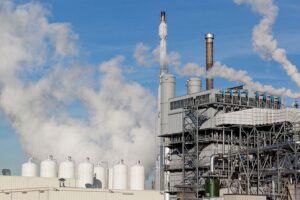
The extensive use of hydrogen is seen as a key strategy to achieve large-scale decarbonization. However, hydrogen (H2) is a potent and short-lived indirect greenhouse gas in addition to being highly flammable. H2 in the atmosphere can warm the climate indirectly by extending the lifetime of methane, triggering reactions that form tropospheric ozone, and breaking down into water vapor in the stratosphere. Researchers will assess the immediate impact on the critical societal need of assessing fugitive emissions from the hydrogen supply chain with new tools to measure hydrogen and methane emissions, as well as supply chain impacts.
Cornell: John Albertson, Greeshma Gadikota (both Engineering/Civil & Environmental Engineering)
EDF: Tianyi Sun, Ilissa Ocko
Understanding Urban Landscape Effects for More Actionable Hyperlocal Air Pollution Estimates

Improving air quality in cities in the U.S. and worldwide is one of the key aspects of building sustainable and healthy communities. Researchers will harness data collected by Google Street Maps to assess air pollution at the pedestrian level. After the first year, this research will establish the foundation for several future research directions.
Cornell: Qi Li (Engineering/Civil & Environmental Engineering)
EDF: Lauren Padilla, Tammy Thompson
Updating Global Spatial Datasets of Livestock Production and Greenhouse Gas Emissions

Overconsumption of animal-source foods has led to significant environmental issues and health problems. This project will create a framework for using machine learning to constantly update a global livestock production and emissions dataset, first developed by Mario Herrero (Global Development, Cornell) and partners over fifteen years ago. The updated datasets will provide timely and relevant information to inform sustainability-related policy.
Cornell: Mario Herrero (Cornell CALS/Global Development)
EDF: Joe Rudek
Cooperative Strategies for Just and Ecological Adaptation to Flooding in New York City

Federal funding for post-disaster response and climate adaptation favors single-family housing, challenging support for the multifamily housing that characterizes most of where people of color live. Low-income housing, especially for racialized minorities, is often sited in less desirable, flood-prone areas. Silos among researchers and practitioners working on climate adaptation and those working on housing and advocacy impede the design of just and ecologically adaptive housing strategies. Researchers will assist the new NYC Mayor’s Office of Climate and Environmental Justice in connecting housing advocacy groups, community organizations, academics, and government staff to develop strategies for more equitable flood relief.
Cornell: Linda Shi (Cornell AAP/City and Regional Planning), Rebecca Morgenstern Brenner (Brooks School), Sara Bronin
Environmental Defense Fund (EDF): Kate Boicourt (New York State Director)
Investigating the Financial Impact of Extreme Weather on Midwestern Farmers over Time and by Farming System
Researchers will quantify the effect of variable weather and climate change on farm financial performance, using long-term local data from the Kansas Farm Management Association. The resulting analysis will inform the risk that agricultural lenders face from climate change and the role of lenders in supporting a transition to more resilient farming practices and systems. The researchers plan to engage agricultural lenders for feedback on their analysis in a conference panel on climate change and agricultural financial risk.
Cornell: Ariel Ortiz-Bobea (Dyson School)
Environmental Defense Fund (EDF): Maggie Monast (Senior Director, Climate-Smart Agriculture), Dave McLaughlin (Senior Economist)
Other: Jenny Ifft, Kansas State University
Addressing Equity in the Army Corps Cost-benefit Analysis Methodology for Flood Protection Infrastructure
This research project will provide evidence on and solutions to the inequity created by applying a strict cost-benefit analysis in the provision of federal flood protection infrastructure. Environmental justice communities–communities with high-flood risk, increased vulnerability, and whose populations are often predominantly Black, Indigenous, and people of color (BIPOC)—tend to have lower property values that are less likely to justify recovery costs within this strict application of a cost-benefit analysis framework. This project aims to protect some of our country’s most vulnerable residents and communities from the increasing risk of flooding. Research partners will convene a workshop with community leaders and academics to develop a revised cost-benefit analysis methodology that incorporates equity into federal flood protection programs.
Cornell: Todd Gerarden (Dyson School)
EDF: Dave McLaughlin (Economist)
Capturing Young Children’s Comprehension and Emotional Reponses to Climate Change

Researchers will examine attitudes and behaviors among young children regarding global climate change (GCC), to assess their understanding and how it makes them feel. The researchers will then develop GCC curriculum guidelines for early childhood educators, in collaboration with Mom’s Clean Air Force and Cooperative Extension – 4-H. These guidelines will describe what aspects of GCC young children can comprehend and how they respond emotionally to GCC.
Cornell: Gary Evans, (Human Ecology/Design and Environmental Analysis)
Environmental Defense Fund (EDF): Rainer Romero (Lead Senior Behavioral Social Scientist)
Mom’s Clean Air Force: Elizabeth Brandt (Regional Field Manager)
Moving Cornell’s Carbon Budget Into the Red
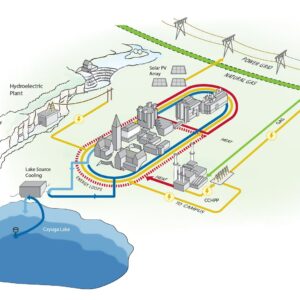
Cornell has led higher education in the effort to achieve carbon neutrality. Thus far, this work has focused on emissions from campus facilities, energy use, and commuting. As we try to stop climate change, we now aim to reduce the whole carbon budget, including carbon emitted upstream of Cornell by purchasing and procurement. In addition, innovations in carbon dioxide removal technologies being developed here at Cornell could potentially improve the carbon budget, as well as providing a scalable set of technologies for the rest of the U.S. and the world. This project funds two young scholars to work with campus groups and external partners like The Sustainability Consortium (TSC) over the next year, to determine what pathways will best reduce carbon dioxide emissions on Cornell’s campus.
Cornell: Natalie Mahowald (Engineering/Earth and Atmospheric Sciences), Fengqi You (Engineering/Chemical and Biomolecular Engineering)
External Partner: The Sustainability Consortium (TSC)
RuFaS (Ruminant Farm Systems) Dairy Model
Cornell researchers are conducting a thorough, scientifically sound evaluation of the Ruminant Farm Systems (RuFaS) model, which provides an evolving model ecosystem to guide dairy farm decision-makers on paths toward sustainable dairy production.
Cornell: Kristan Reed (Cornell CALS/Animal Science), Fengqi You (Engineering/Chemical Engineering), Johannes Lehmann (Cornell CALS/School of Integrative Plant Science), Dominic Woolf (Cornell CALS/School of Integrative Plant Science), Quirine Ketterings (Cornell CALS/Animal Science), Curt Gooch (Cornell CALS/Biological and Environmental Engineering)
Dairy Management Inc. (DMI) Investigator: Juan Tricarico
General Mills: Jim Eckberg
WWF: Melissa Ho
TNC: Kelly Racette, Steve Richter
Valley Ag Software: Jordan Kraft, Robin Jacobs
Cayuga Milk Ingredients: Kevin Ellis, Julia Smith
Producers: Doug Young (NY), Steve Maddox (CA), Bill Wavrin (WA)
RuFaS Exec Team: Hector Hernandez (SDSU), Ermias Kebreab (UC Davis), Greg Thoma (U of Arkansas), Jennie Popp (U of Arkansas), Victor Cabrera (UW Madison), Jennifer Van Os (UW Madison), Peter Vadas (USDA), Kevin Panke-Buisse (USDA-ARS)
Pandemic Prevention Policy Analysis

Building on the momentum of a successful 2021 joint event with the World Wildlife Fund (WWF), “Emerging Disease, Wildlife Trade, and Consumption: The Need for Robust Global Governance—Exploring Ways to Prevent Future Pandemics,” Cornell Atkinson will fund a postdoctoral researcher with specific strengths in policy and legal analysis, to engage with WWF and other NGOs to assess high-level governance gaps inhibiting progress on this issue.
Cornell: Steve Osofsky (Veterinary College / Population Medicine and Diagnostic Sciences)
World Wildlife Fund (WWF)
Repair and Redress: Growing the Repertoire of Community-led Climate Justice
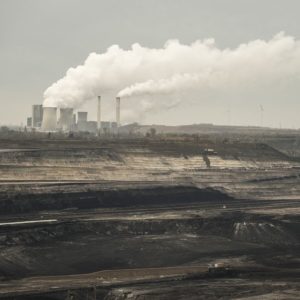
This project provides additional support for the 2021 AVF, Expanding the Repertoire of Community-led Climate Justice Practices, supporting collaborations with three groups of external experts: one with situated and intimate knowledge of the effects of environmental change in concrete places and communities; one working actively on generalizable methods and techniques; and one looking to imagine new models of community and justice in a climate-disrupted world.
Cornell Investigators: Christopher Csikszentmihalyi, Phoebe Sengers, and Steven Jackson (all Bowers School/Information Science)
External Collaborators: The Environmental Data & Governance Initiative (EDGI), Public Accountability Initiative (LittleSis), Public Laboratory for Open Technology and Science
Participatory Forest Restoration and Community-based Monitoring in Malawi
This project provides additional support for the 2021 AVF Climate Change Preparations Informed by Local Forest Inventories, supporting a collaboration with Soil, Food, and Healthy Communities (SFHC), a Malawian non-profit organization that has trained thousands of farmers and vulnerable groups in agroecological practices over the past 20 years, and which is currently facilitating the AVF-funded participatory forest inventory and climate change scenarios project.
Cornell Investigator: Rachel Bezner Kerr (Global Development)
External Collaborators: Soil, Food, and Healthy Communities (SFHC); Lilongwe University of Natural Resources and Agriculture; Scientists from Mzuzu University, Germany, and Norway; and Belmont Forum/NSF-funded FARMS for Biodiversity
Sprouted Grains Grown Using Hydroponic Technology: Effects on Milk Production Efficiency and Nutrient Utilization in Dairy Cattle

This project provides additional support for the 2021 AVF, Increasing Milk Production and Reducing Greenhouse Gas by Feeding Cows Hydroponic Sprouts, to support two student interns from Tuskegee University to work with staff from Grōv and the AVF team to operate the hydroponic grow system and manage fodder growth, which will involve monitoring and controlling grow condition protocols.
Cornell Investigators: Joseph McFadden, Kristan Reed, and Mike Van Amburgh (all Cornell CALS/Animal Science), Neil Mattson (School of Integrative Plant Science/Horticulture),
External Collaborator: Dr. Olga Bolden-Tiller (Tuskegee University)
Hotspots of Nitrogen Loss in River Basins
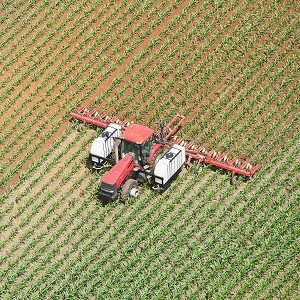
Researchers will examine nitrogen runoff in the watersheds of both the Upper Mississippi River Basin and the Chesapeake Bay. Nitrogen is a vital nutrient for agricultural production, but nitrogen runoff from agricultural systems creates an array of environmental problems. The researchers hope to identify hotspots of nitrogen loss, which are disproportionally contributing to water quality problems. By mapping the distribution of these hotspots, the researchers will be able to pinpoint areas where improvements to agricultural management can deliver the greatest environmental benefit.
Cornell: Robert Howarth (Cornell CALS/Ecology and Evolutionary Biology)
EDF: Eileen McLellan (Lead Sr. Scientist), Alison Eagle (Sustainable Agriculture Program Scientist)
Strategies for Climate-Ready Fishing Communities: Optimal Fishing Portfolios for Changing Ocean Ecosystems
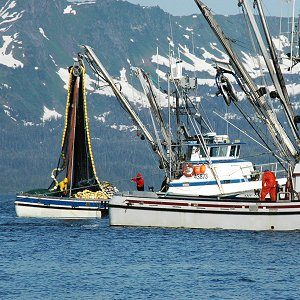
Climate change is shifting where marine species can live, particularly in high-latitude oceans. As a result, fishing communities face increasing threats to their economies and cultural heritage while they also risk losing fishing access under changing marine management. How can communities maintain access to commercial fishing resources in the face of climate-driven ocean changes? Focusing on Alaskan fisheries, this team will seek to assess the amount of climate risk facing fishing communities, identify balanced community fishing rights portfolios that are responsive to climate-driven fishery changes, and create innovative finance opportunities to support climate adaptation strategies for fishing communities. The project will integrate ongoing conservation finance efforts at Cornell and TNC, in hopes of attracting capital for community-based lending programs to assist fishing communities with climate adaptation.
Cornell: Suresh Sethi (Cornell CALS/Natural Resources and the Environment), Alex Flecker (Cornell CALS/Ecology and Evolutionary Biology), Carla Gomes (Bowers/Computer Science), John Tobin-de la Puente (Dyson School)
TNC: Adrianna Muir (Alaska), Kate Kauer (California), Rich Bell (North America)
Assessing Progress and Barriers to Ecological Restoration of State Property Buyout Programs
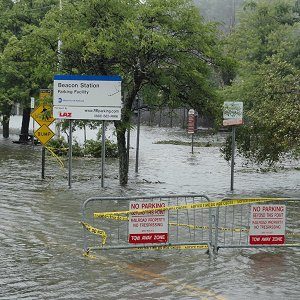
Nationwide, more than 13 million homes are located in floodplains, and 2.5 million properties will likely be chronically inundated by 2100. After each disaster, pundits debate whether communities should “give parcels back to Mother Nature,” as Governor Cuomo said after Hurricane Sandy. Over the last decade, several states have developed buyout programs, but no studies have systematically compared and analyzed them. This team will study programs in five states (New York, New Jersey, Florida, Texas, and Washington) that have created buyout programs that are promising from community and ecological health perspectives. They will then work with state program officers, TNC staff, and Cornell faculty and students to jointly identify specific research goals, concerns, data needs, case study sites, and research outputs, enhancing the likelihood of success.
Cornell: Linda Shi (Cornell AAP/City and Regional Planning), Amelia Greiner Safi (Master of Public Health Program), Rebecca Morgenstern-Brenner (Brooks School), Jamie Vanucchi (Cornell CALS/Landscape Architecture)
TNC: Anna Brown (North America Climate Adaptation Lead), Christine Shepard (Director of Science), Marci Bortman (NY Director of Climate Adaptation)
Soil Health Assessment, Management, and Policy to Support Sustainable Land Management in China
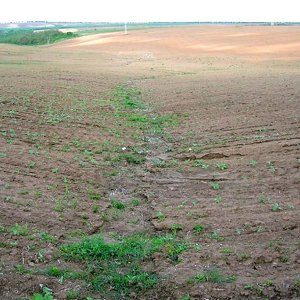
Compared to the United States, China has much less agricultural land, by area. China’s grand challenge is to sustainably feed more than 1/6th of the world’s population on less than 1/14th of the world’s arable land area, while resources diminish and the climate changes. In order to ensure future food, water, and energy security, the health of China’s soils must be improved. Soil assessment methods in China currently focus on production-oriented management, rather than sustainable ecosystem services. Cornell University is a pioneer in soil health education, research programs, and methodologies for soil health assessment. This team proposes to adapt the Cornell framework for Chinese production environments, which will be essential for the holistic assessment of soil functioning, identification of sustainable management solutions, prioritizing TNC program efforts, and informing policy for different stakeholders.
Cornell: Harold van Es (School of Integrative Plant Science), Rebecca Schneider (Cornell CALS/Natural Resources and the Environment), Joseph Amsili (Cornell Cooperative Extension)
TNC: Yi Ling, Nan Zang (both China Program)
China Agricultural University: Junling Zhang
Agricultural Burning in India
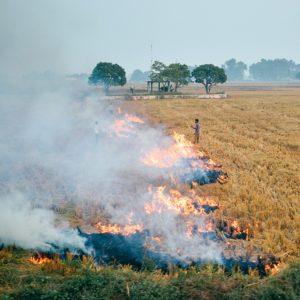
This project provides additional support for the 2020 AVF Bending Agricultural Burning Trajectories in Eastern India, enabling engagement with the International Rice Research Institute (IRRI) to integrate a gender component in the research.
Cornell: Andrew McDonald (CALS/CSS)
External Collaborator: International Rice Research Institute (IRRI)
Antibacterial Resistance, Ithaca Drinking Water
This project provides additional support for the 2020 AVF Antibacterial Resistance in Ithaca’s Drinking Water, enabling the participation and engagement of three external partners, to explore more advanced drinking water treatment technologies, coordinate with external researchers, enhance local drinking water testing, and translate the research results and outcomes into a public-friendly format.
Cornell: April Gu (Engineering/Civil and Environmental Engineering)
External Collaborators: Charles B. Bott (Sustainable Water Initiative for Tomorrow – SWIFT), John Albert (Water Research Foundation – WRF), Ithaca Drinking Water Treatment Plant
Equipping K-12 schools in COVID-19
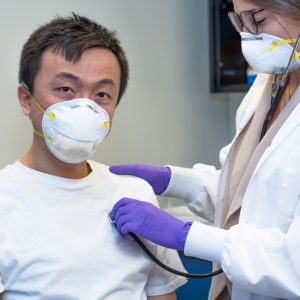
This project provides additional support for the 2020 AVF Reducing Healthcare Workers’ Risk From Disease Spread, to work with School in the Square (S2), and independent public charter school in Manhattan, as a test site to develop science-driven, school-specific strategies to mitigate virus transmission in indoor environments through an integrated monitoring and modeling approach.
Cornell: Max Zhang (Engineering/Mechanical and Aerospace Engineering), Nathaniel Hupert (Weill Cornell Medicine/Population Health Sciences)
External Collaborator: School in the Square (S2)
Coalition for Private Investment in Conservation

The Coalition for Private Investment in Conservation (CPIC) manages over a dozen completed investment blueprints, many developed with support from the PwC consulting team working with CPIC thematic working groups per Cornell Atkinson a conservation finance grant.
Cornell Investigator: John Tobin-de la Puente (Dyson School)
Partners: Environmental Defense Fund (EDF), Coalition for Private Investment in Conservation (CPIC)
Reduction of Heavy Metals in Infant and Toddler Foods

Because of the health benefits of fruits and vegetables, there has been an increasing tendency to add fruits and vegetables into infant and toddler foods. However, the potential risk of high heavy metal contents in fruits and vegetables due to their natural exposure to soil/water, and pesticides, is a significant concern. The Baby Food Council, a collaboration among Cornell University and a group of infant and toddler food companies, seeking to reduce heavy metals in the companies’ products, provided primary support for a project to evaluate the best management practices to reduce harmful heavy metals in infant and toddler food. Cornell researchers will determine the contents of heavy metals, such as Lead, Cadmium, Arsenic, and Mercury; and assess the effects of processing and facilities on heavy metals in the final products.
Cornell: Rui Hai Liu (Cornell CALS/Food Sciences)
EDF: Tom Neltner (Chemicals Policy Director)
Insights From Localized Air Pollution Data: Integrated Mapping and Assessment of Urban Air Pollution
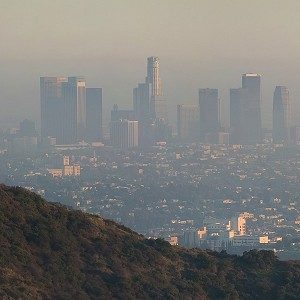
Urban air pollution differs significantly across communities due to multiple emission sources, complex urban layouts, and local weather patterns. Assessing the variability of ambient air pollution and identifying its sources are critical to effective pollution control. Previously, analytical techniques have been developed by separate scientific communities. We propose a unified framework that integrates various data sources such as land-use parameters, ground-based fixed monitoring, and satellite remote sensing to inform targeted local emission control actions. The framework has the potential to become “transferable” from one community to another and the impact from the project can be amplified by EDF’s global efforts in tackling urban air pollution.
Cornell: Max Zhang (Engineering/Mechanical and Aerospace Engineering)
EDF: Ramon Alvarez (Associate Chief Scientist)
Heavy Metals in Baby Food: Cumulative Neurodevelopment Effects
Heavy metal contamination is a ubiquitous and serious issue for sustainable health. Although heavy metals are naturally present in the earth’s crust, industrial activities, mining, improper waste disposal, lead shot, and pesticides contribute to elevated levels in soil and water and the food supply. Recently, the presence of Lead, Mercury, Cadmium, and Arsenic contamination of commercial infant/toddler food has come to the forefront as a major public health concern. The goal of this study is to better characterize the impacts of exposure to individual heavy metals and their mixtures on the neurological development and behavior of developing children.
Cornell: Motoko Mukai (Food Science)
EDF: Jennifer McPartland (Health Program)
Tracing Aquaculture Feed Sources to Guide Mitigation of Biodiversity and Pollution Impacts
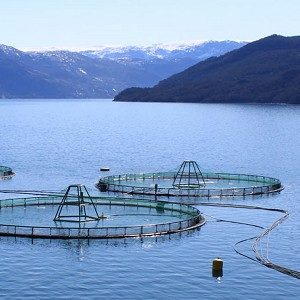
Aquaculture is the fastest growing source of animal protein to feed humanity. Its exponential expansion is fueled by harvesting of wild fish, which are reduced into fishmeal and oil that are critical ingredients in pelleted feeds. Intensive fishing has contributed to collapse of many stocks, yet market demand to feed both people and farmed fish is expected to continue growing, and could lead to widespread alteration of marine food webs. At the same time, intensive fish farming is creating further pollution of rivers, lakes, and coastlines. These diverse impacts of aquaculture require new mitigation strategies to safeguard marine biodiversity and human food security. Our vision is to use genetic tracking of fish sources and mercury isotope tracing of contaminants to reveal what types of intervention would most enhance aquaculture sustainability.
Cornell: Peter McIntyre, Nina Therkildsen (Cornell CALS/Natural Resources and the Environment)
EDF: Tim Fitzgerald (Oceans Program)
Can Wind and Solar Save the Amazon? An Analysis of Energy System Feasibility and Economic Costs
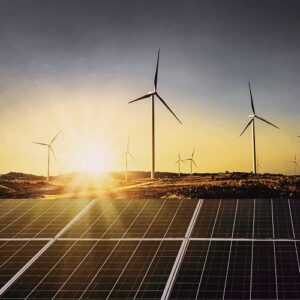
While hydropower provides the majority of current renewable energy electricity production, and it is a reliable and mature renewable energy technology, it also has negative impacts on freshwater systems and livelihoods. This project will assess the feasibility to “repower” energy systems by integrating greater proportions of low-impact wind and solar renewable energy, create a country dashboard tool for low-impact energy provisioning portfolios, and develop general principles for understanding thresholds of intermittent low-impact wind and solar to meet existing and future energy demands.
Cornell: Eilyan Bitar (Cornell Engineering/Electrical and Computer Engineering)
TNC: Joe Kiesecker (Lead Scientist – Global Lands), Sharon Baruch-Mordo (Spatial Scientist – Global Lands)
Modeling Sound Attenuation and Individual Space Usage to Estimate Density of Animal Populations

Population density is a common way to assess the health of a species in an area. Passive acoustic monitoring can provide reliable population density estimates for some species, but it often requires human interpretation of data. This project will further automate data analysis and incorporate new statistical models to improve density estimates of endangered gibbons in Borneo.
Cornell: Angela Fuller (Cornell CALS/Natural Resources and the Environment), Holger Klinck (Lab of Ornithology)
TNC: Dr. Edward Game (Lead Scientist – Asia Pacific Region), Mohamad Rifqi (Primatologist – Indonesia Program)
Soil-based Climate Mitigation Solutions in Developing Countries: a Case Study for Zambia
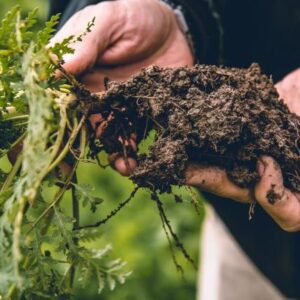
This project will assess the potential contribution of soils–specifically soil organic carbon–to the Intended Nationally Determined Contributions (INDC) outlined in the Paris Climate Accord. This new information will fulfill the level of precision required by Zambia for greenhouse gas (GHG) accounting. It will also serve to raise the profile of soils, being the largest terrestrial carbon pool globally yet missing in INDCs, in the national inventory and projections of potential mitigation options.
Cornell: Ying Sun, Johannes Lehmann (Integrative Plant Science)
TNC: Deborah Bossio (Lead Soil Scientist), Mundia Matongo (Zambia Office), Peter Woods Ellis (Forest Carbon Scientist), Anne Trainor (Spatial Scientist and Director of Smart Growth, Africa) Bronson Griscom (Director of Forest Carbon Science)
Does Agricultural Conservation Increase Resilience to Adverse Weather and Reduce Crop Insurance Indemnities?
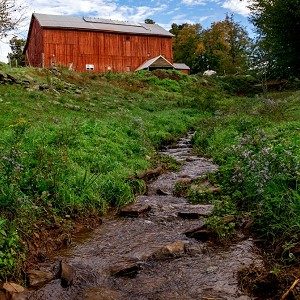
Current agricultural production practices lead to a variety of environmental problems, including nitrogen fertilizer runoff, hazardous algal blooms, greenhouse gas emissions, soil erosion, and declining soil fertility. Agricultural conservation practices such as conservation tillage and cover crops offer the promise to reverse these trends, but improving sustainability and maintaining a financially viable farm sector must go hand-in-hand. This novel study will assess the relationship between conservation practice adoption, weather, yields, and crop insurance indemnities, to provide the robust information needed to inform modifications to crop insurance products that encourage agricultural conservation adoption.
Cornell: Jennifer Ifft (Dyson School), Kelly Gardner (Dyson School)
EDF: Maggie Monast (Agricultural Sustainability)
Size of the Prize: Establishing Soil Carbon Sequestration Potentials
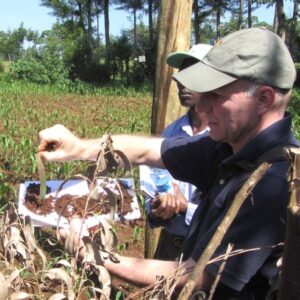
The role of soil organic carbon in global carbon cycles is receiving increasing attention both as a potentially large and uncertain source of CO2 emissions in response to rising global temperatures and as a natural sink for carbon that can reduce atmospheric CO2. This project will create decision support tools to help stakeholders–such as Ethiopia, Kenya, and Guinea as well as the African Development Bank and The World Bank–to achieve their goals in optimizing soil carbon sequestration while improving other soil ecosystem services such as food security, energy production, and the availability of clean water. The researchers will initially target select countries such as Ethiopia, Kenya, and Guinea as well as the African Development Bank and The World Bank.
Cornell: Johannes Lehmann, David Wolfe, Dominic Woolf (all School of Integrative Plant Science), Jonathon Schuldt (Cornell CALS/Communications)
TNC: Deborah Bossio (Lead Soil Scientist), Stephen Wood (Senior Scientist – Agriculture and Food Systems), Priya Shyamsundar (Lead Economist)
Agricultural Sustainability Data Hub
Farm databases collect mountains of useful data about farming practices and environmental conditions – information critical for agricultural and environmental policy research and sustainability initiatives, but anonymized data is largely inaccessible to researchers. This project will design and map a secure Agricultural Sustainability Data Hub at Cornell supported by the Ag-Analytics data platform. Cooperating with agricultural and food industry partners and grower associations, the digital hub would serve as a focal point for ag-data sustainability activities, incorporating anonymized data sourced from agricultural service providers, food producers, merchandisers, and retailers. This secure data warehouse will inform sustainability research and provide practical tools and analytics.
Cornell: Joshua Woodard (Dyson School)
EDF: Robert Parkhurst (Agriculture Greenhouse Gas Markets)
Financing Sustainable Fisheries
Fishery reform is a big investment – but we know from experience that recovered, well-managed fisheries can deliver significant financial returns to fishers, coastal communities and the many businesses that bring seafood to the table. This project aims to make sustainable fisheries an investment opportunity that meets the risk-return expectations of mainstream capital providers. Jumping off from successful business models in comparable sustainable business sectors, Cornell and EDF researchers will develop, explore and characterize best practices for project development in the emerging area of sustainable fisheries financing. The team’s findings and outreach will help stimulate investment in sustainable seafood production, marine biodiversity, and global livelihoods and food security.
Cornell: John Tobin-de la Puente, (Dyson School), Suresh Andrew Sethi (Cornell CALS/Natural Resources and the Environment)
EDF: Tim Fitzgerald (Fishery Solutions Center), Phoebe Higgins (California Fisheries Fund)
Sardine Harvest Control for the Philippines (EDF)
Sardine fishing is vital for food security and livelihoods in the Philippines. As a step toward harvest control for all of the nation’s fisheries, EDF is working with Filipino fishery managers, scientists and industry representatives to develop new science-based harvest rules for the sardine fishery. Cornell and EDF researchers will work together to evaluate and test acoustic monitoring as a cost-effective method for estimating sardine biomass, a measurement of total adult stock that allows fishery managers to calculate optimal annual catch limits. The project aims to support adaptive fishery management, improve fishing yields and profits, and protect ecosystem services in the western Pacific.
Investigators: Aaron Rice (Cornell Lab of Ornithology), Suresh Andrew Sethi (Cornell CALS/Natural Resources and the Environment)
EDF: Rod Fujita
Power Huron Project
California’s planned electricity rate reform will save $700 million and prevent 8 million tons of greenhouse gas pollution each year. The state’s transition to time-of-use pricing, however, may stall if at-risk communities are disproportionately affected by higher bills or negative health impacts. Based in Huron, California, and partnering with EDF’s sister program in Fresno, this project will provide practical strategies to identify and upgrade vulnerable homes. The initiative will help city agencies, utilities and community partners work together to address low-income residents’ risks – so that people living in inefficient homes and rental properties can benefit from and support clean energy.
Cornell : Howard Chong (Cornell Hotel School)
EDF: James Fine (Senior Economist)
City of Huron, CA: Ray León (Mayor)
Mobile Sensing of Volatile Organic Compounds
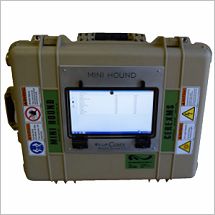
Controlling methane emissions from oil and gas wells is a vital step toward slowing climate change and protecting global public health – but other airborne pollutants associated with oil and gas may have local health impacts. The U.S. Environmental Protection Agency manages a national network of only 34 stations to monitor long-term concentrations of volatile organic compounds, so little is known about the risk to communities near most oil and gas sites. This project will evaluate sensors that detect and quantify emissions of compounds such as benzene, using a mobile monitoring approach. This approach will reduce monitoring costs while giving communities and policymakers solid information about emissions levels and health risks.
Cornell Investigators: John Albertson (Civil and Environmental Engineering), Oliver Gao (Civil and Environmental Engineering)
EDF: David Lyon (Oil and Gas Program), Beth Trask
US-EPA: Eben Thoma (ORD)
Using Humor to Promote Climate Change Activism among Young Adults

Many young adults support environmentally conscious values through their private actions, such as tweeting about causes or buying “green” products, but they are less likely than ever to vote. This project will give EDF the communication tools it needs to reach out to Millennials (ages 18–30)—the rising generation for climate change activism and political change. Using professionally produced YouTube videos, the researchers will test humorous messages as a strategy for boosting public engagement. The study will examine whether funny messages—similar to satirical news programs successful with younger audiences—are more effective than informational or fear-based appeals for motivating a new generation of climate activists.
Cornell: Jeff Niederdeppe (Cornell CALS/Communication)
EDF: David Acup
Toxicological Assessment of Hydraulic Fracturing Wastewater Treatment
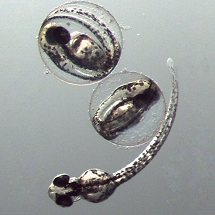
Reported health and environmental risks of hydraulic fracturing wastewater have raised widespread public concerns in the Marcellus shale region and beyond. This study will be the first to assess current wastewater treatment practices and the toxicological effects of exposure to “fracking” wastewater. With the help of zebrafish, which have an endocrine system similar to ours, the team will test untreated and treated water samples from facilities that process hydraulic fracturing wastewater. Tracking the tiny fishes’ molecular responses and reproductive success will reveal how hydraulic fracturing chemicals affect human and ecosystem health and point to the best procedures for treating wastewater before releasing it back into the environment.
Cornell : Motoko Mukai (Food Science)
EDF: Elena Craft (Senior Health Scientist), Dan Mueller (Oil and Gas Team Director)
Integrated Approach to Climate Change
The best way to fight climate change might be with a portfolio of strategies, integrating mitigation, adaptation, and CO2 removal. Some would include solar geoengineering, but others dismiss climate engineering interventions that reflect sunlight back into space as risky stand-alone approaches. This project will build on EDF’s role in helping to catalyze discussions about international geoengineering research governance by modeling the implications of including geoengineering as one element in a broad-based plan to meet global climate targets. The team will use dynamic emulators to model regional climate consequences of incorporating solar geoengineering, in conjunction with other essential actions like emissions cuts and carbon containment. The results will inform our understanding of geoengineering policy and applications.
Cornell: Douglas MacMartin (Cornell Mechanical and Aerospace Engineering)
EDF: Jane Long
Transforming Fisheries Science and Management
This project will deploy acoustic instruments on unmanned, wave-propelled ocean robots, called Wave Gliders, to improve surveys and management of sardine and anchovy fisheries in the highly productive coastal upwelling ecosystems off California and Peru. The team will compare acoustic data collected by the Wave Gliders to data collected during conventional shipboard surveys, with subsequent modeling studies conducted to evaluate the new technology’s costs and benefits. These more comprehensive surveys of commercially important fish populations will reduce the chance of stock collapses in the face of climate change, protecting top predator species and multibillion-dollar fishing industries around the world.
Cornell: Charles Greene, Earth and Atmospheric Sciences
EDF: Helen Takade-Heumacher, Fishery Solutions Center; Jake Kritzer, Fishery Solutions Center
Increasing Corn Production while Reducing Fertilizer Pollution
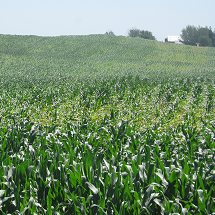
Nitrogen runoff from fertilizer is a major environmental pollutant. EDF has been working to increase knowledge of sustainable agriculture practices. Cornell’s Adapt-N precision tool helps farmers apply fertilizer for maximum effectiveness and uptake, reducing runoff into streams and waterways. The project will help Corn Belt communities increase food production for a growing world, reduce costs, and reduce pollution.
Cornell: Harold van Es (School of Integrative Plant Science)
EDF: Eileen McLellan
Surveying Environmental Priorities in Different Ethnic Communities
Minority communities in the U.S., especially Hispanic communities, report high levels of concern about environmental problems but are less likely to engage in traditional environmentally friendly actions. Cornell and EDF will launch a new national survey to better understand factors that are important to different ethnic communities and approaches that will best resonate with them.
Cornell: Jonathon Schuldt (Cornell CALS/Communication)
EDF: Rainer Romero-Canyas
Protecting Fish and Fishermen in Myanmar
EDF has helped develop catch shares programs in the U.S., Europe, Mexico, Belize and Cuba to prevent overfishing and protect a vital food source. The new project will expand the work to Asia and help coastal communities in Myanmar maintain productive fisheries and provide ample food while protecting the environment.
Cornell: Drew Harvell (Ecology and Evolutionary Biology)
EDF: Doug Rader
Locating and Quantifying Methane Emissions with a Google Streetview Car
EDF and Google Earth launched a successful pilot program to track methane emissions this year. The collaboration with Cornell will allow for more field measuring and complex modeling to analyze data on the powerful greenhouse gas and, ultimately, to find and stop dangerous methane leaks that contribute to climate change.
Cornell: John Albertson (Civil and Environmental Engineering)
EDF: Joe Rudek