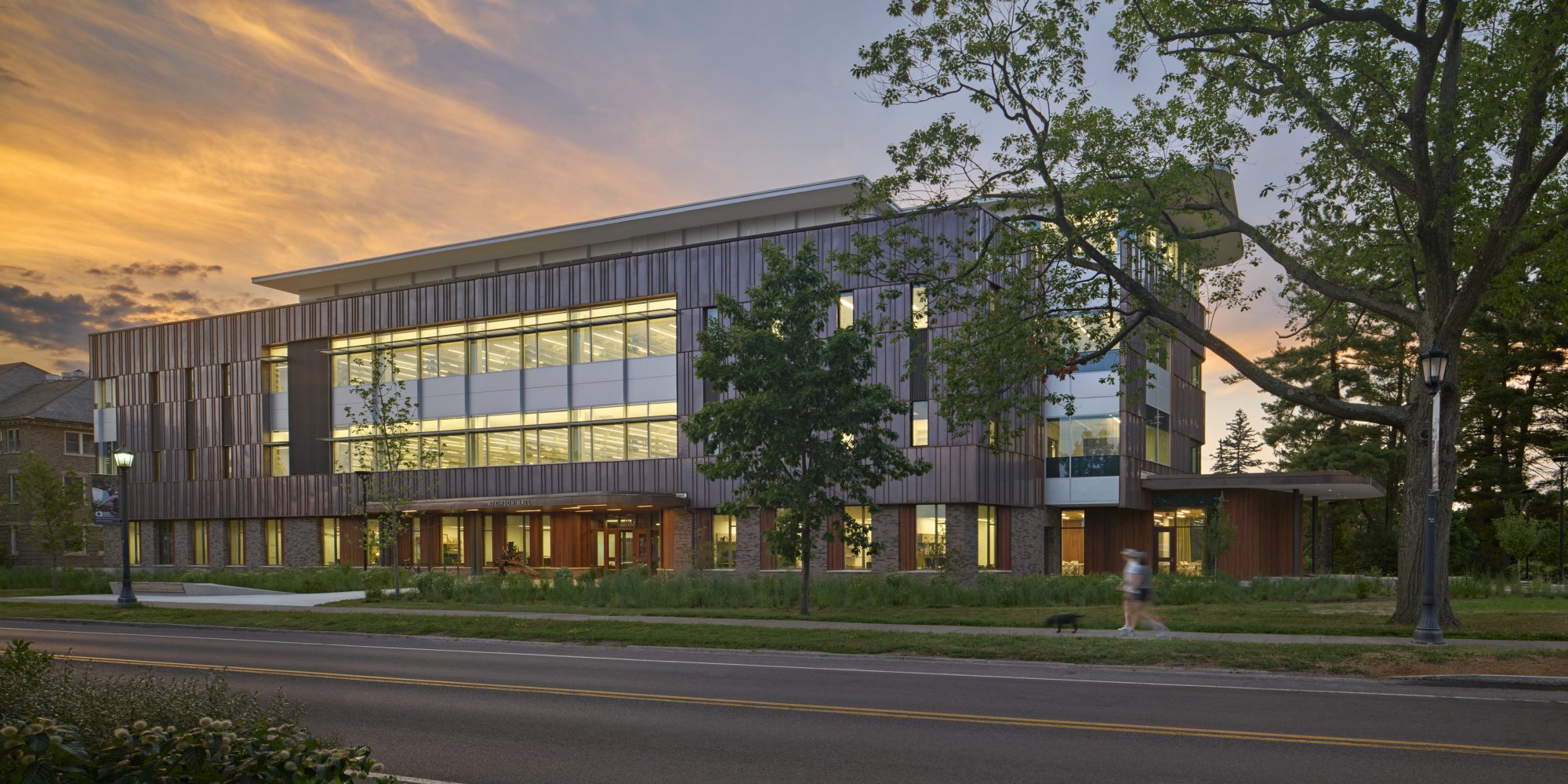
We are the hub of sustainability research at Cornell University
At the Cornell Atkinson Center for Sustainability, we advance sustainability solutions that ensure people and the planet not only survive but thrive.
Our community of nearly 800 Faculty Fellows — representing all of Cornell’s colleges and schools — works across disciplines to tackle the most pressing challenges in climate risk, energy transitions, food security, and One Health. Supported by 16 staff experts at Cornell Atkinson, we connect researchers and strengthen partnerships with industry leaders, policymakers, and communities to move ideas from knowledge to real-world impact.
Since our founding in 2010, we have disbursed over 1,200 research awards, investing over $51 million in sustainability research. We also train the next generation of sustainability leaders through a robust portfolio of student research programs, internships, and competitive postdoctoral fellowships.
As a hub for dialogue and partnership, we host 50+ gatherings annually, bringing together researchers, decision-makers, and the public to catalyze collaboration and accelerate sustainable solutions.