2022: Abomasal Infusion of Nutritionally Required Nonessential Amino Acids for Evaluation of Energy and Amino Acid Utilization and Productive Efficiencies in Lactating Dairy Cattle
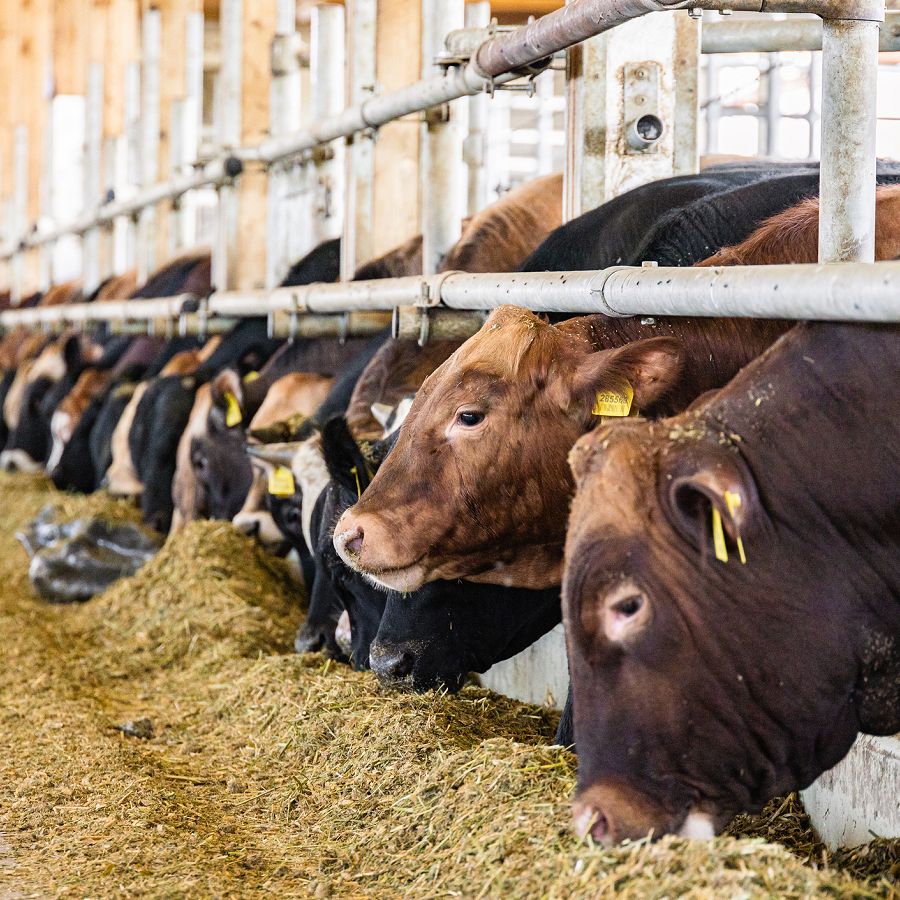
The dairy industry is focused on methane reduction, yet nitrous oxide from overfeeding protein is 10x more potent as a greenhouse gas and little is being done to reduce protein feeding. The researchers have developed a new approach for estimating amino acid requirements and supply for all essential amino acids (EAA) in their nutrition model, the Cornell Net Carbohydrate and Protein System, which has allowed them to reduce the total N intake of cattle and be more precise in formulating EAA and total N to both improve productivity and reduce N excretion. To improve the ability to reduce N intake and enhance milk protein output, they need to investigate the role of nonessential amino acids (NEAA) in high-producing cattle to determine if they can rely on requirements and supply of metabolizable protein to account for those or if they need to start formulating around particular NEAA to improve milk protein efficiency. They propose to do an abomasal infusion study in high-producing cattle to develop a preliminary data set for another grant.
Investigators: Michael Van Amburgh, Animal Science; Dave Barbano, Food Science