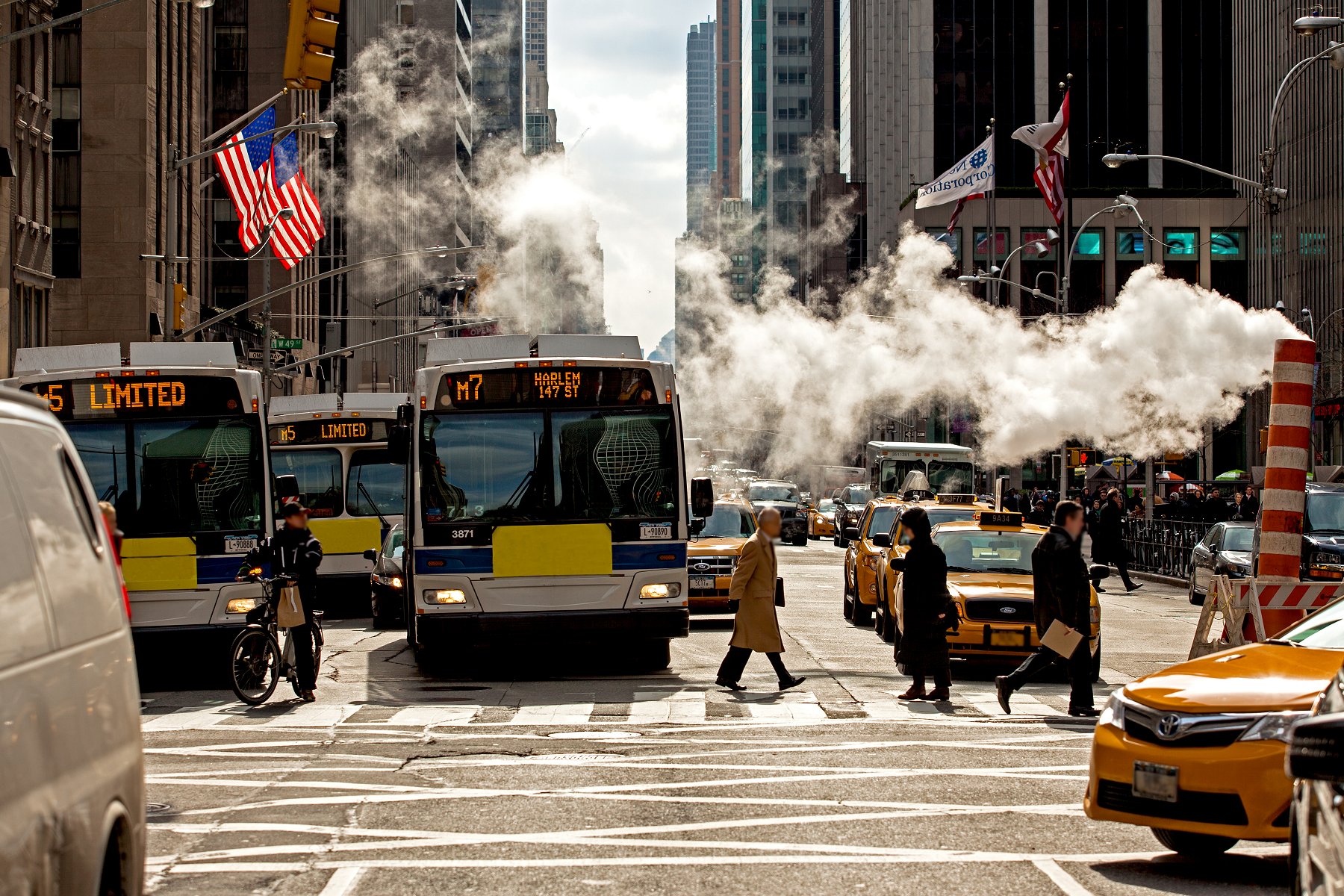
2026: AI-Enhanced Differentiable Computational Fluid Dynamics (CFD) for Urban Airflow Modeling and Pollution Source Inference (EDF)
Urban air pollution can vary dramatically from one block to the next, but today’s tools either operate at kilometer scales or are so computationally expensive they cannot be used routinely for source identification. We propose an AI-enhanced, differentiable “neural-CFD” framework that fuses urban airflow physics with dense sensor observations to infer local pollution sources with quantified uncertainty. Cornell will build a new, fast modeling approach that combines GPU-accelerated simulation with physics-informed generative AI. EDF will guide use cases, provide dense sensor datasets, and ensure alignment with Air Tracker and Healthy Communities priorities. This project will give communities and local governments a practical way to identify the most likely sources of neighborhood-scale pollution.
Cornell: Jian-Xun Wang (Cornell Duffield Engineering / Mechanical and Aerospace Engineering)
Environmental Defense Fund: Tammy Thompson (Senior Air Quality Scientist)